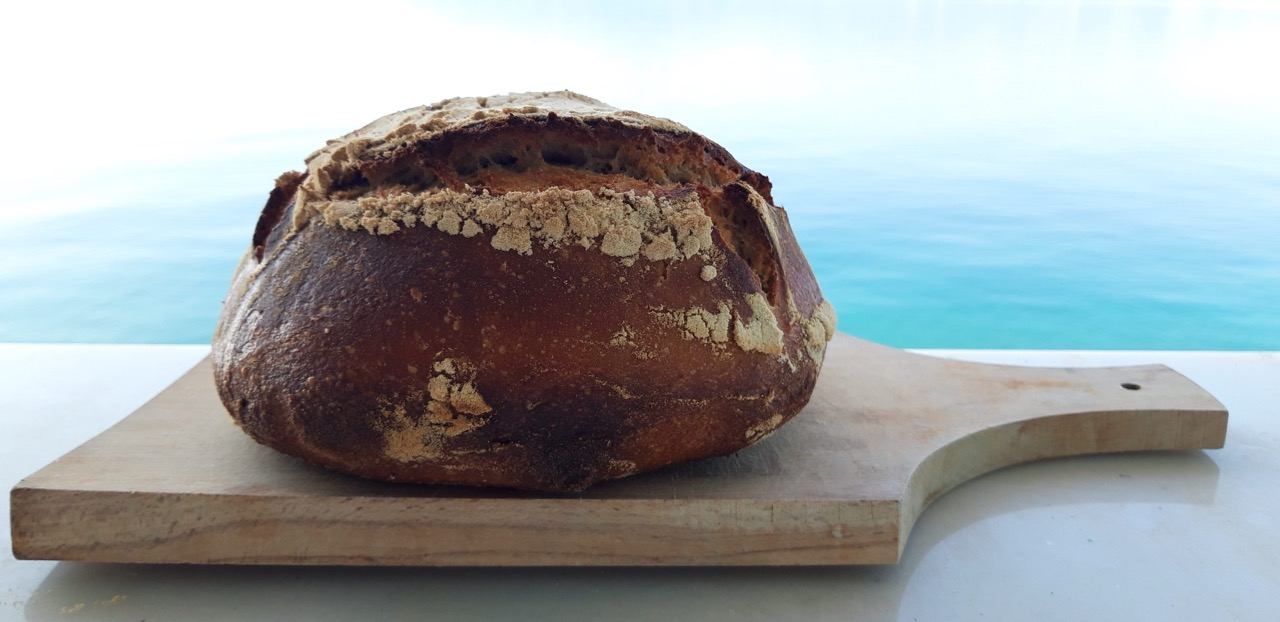
Bake 01 · the early days
The sea-view loaf
One of our first proper boules — baked the night before, then carried to where it tasted best. The crust split off-score, but the ear opened and the crumb held. We were hooked from here.

Sourdough is the one thing in the kitchen that flatly refuses to be rushed — which, since we settled on Tinos, suits us. This is our running log of it: the loaves we got right, the one we badly overbaked, and the focaccia we escaped to whenever the starter turned moody.
Nothing here is expert. It's a family experiment — a jar of starter living on the counter, a battered Dutch oven, and a kid who enjoys the poke test more than is strictly reasonable. Below: seven bakes in order, then the fifteen mistakes we keep learning not to make.
A few years of trying, photographed honestly — the wins kept us going, the failures taught the most.
One of our first proper boules — baked the night before, then carried to where it tasted best. The crust split off-score, but the ear opened and the crumb held. We were hooked from here.
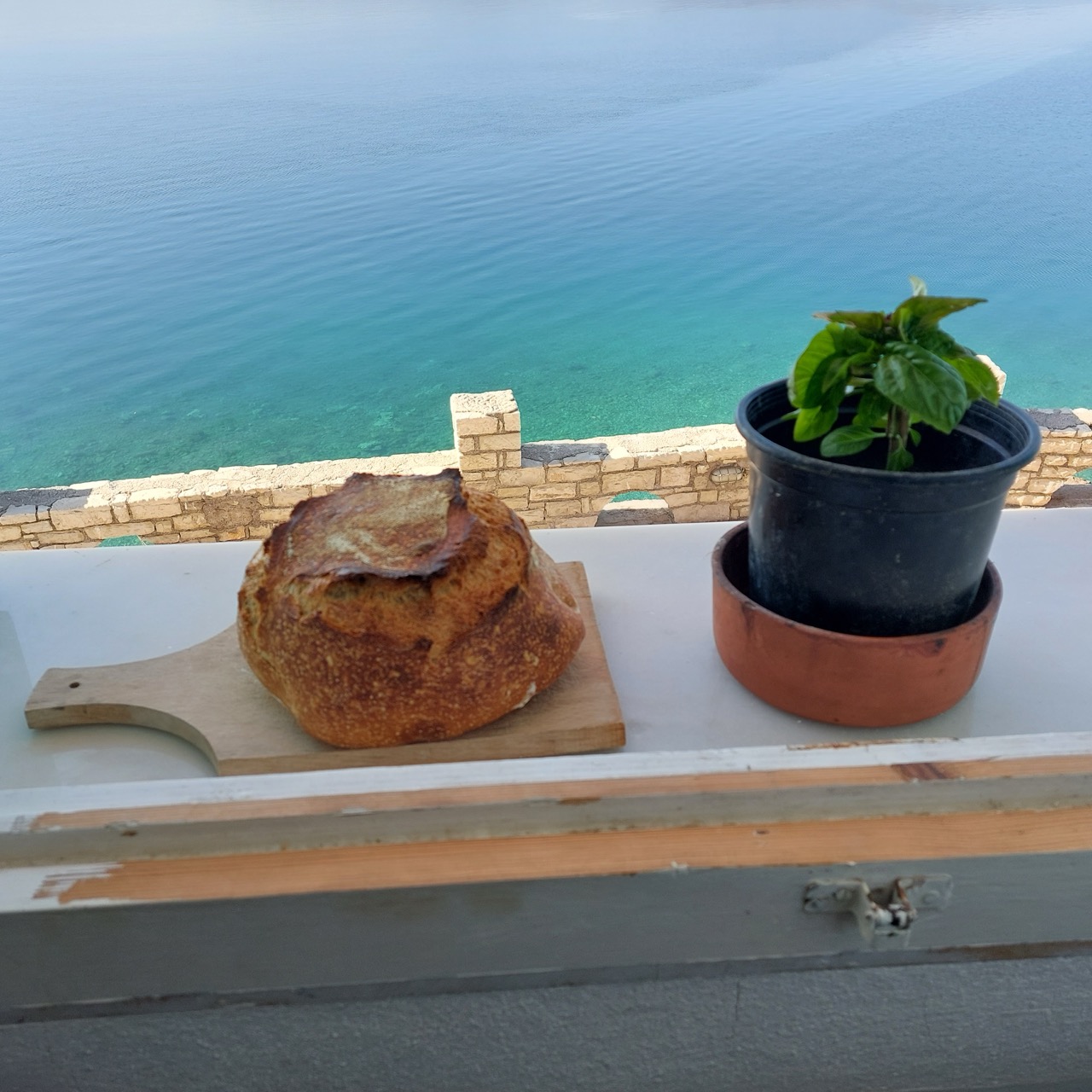
A modest, even bake we still rate. Cooled overnight, then set out on the wall next to the basil we were growing alongside it. Slow living, made edible.
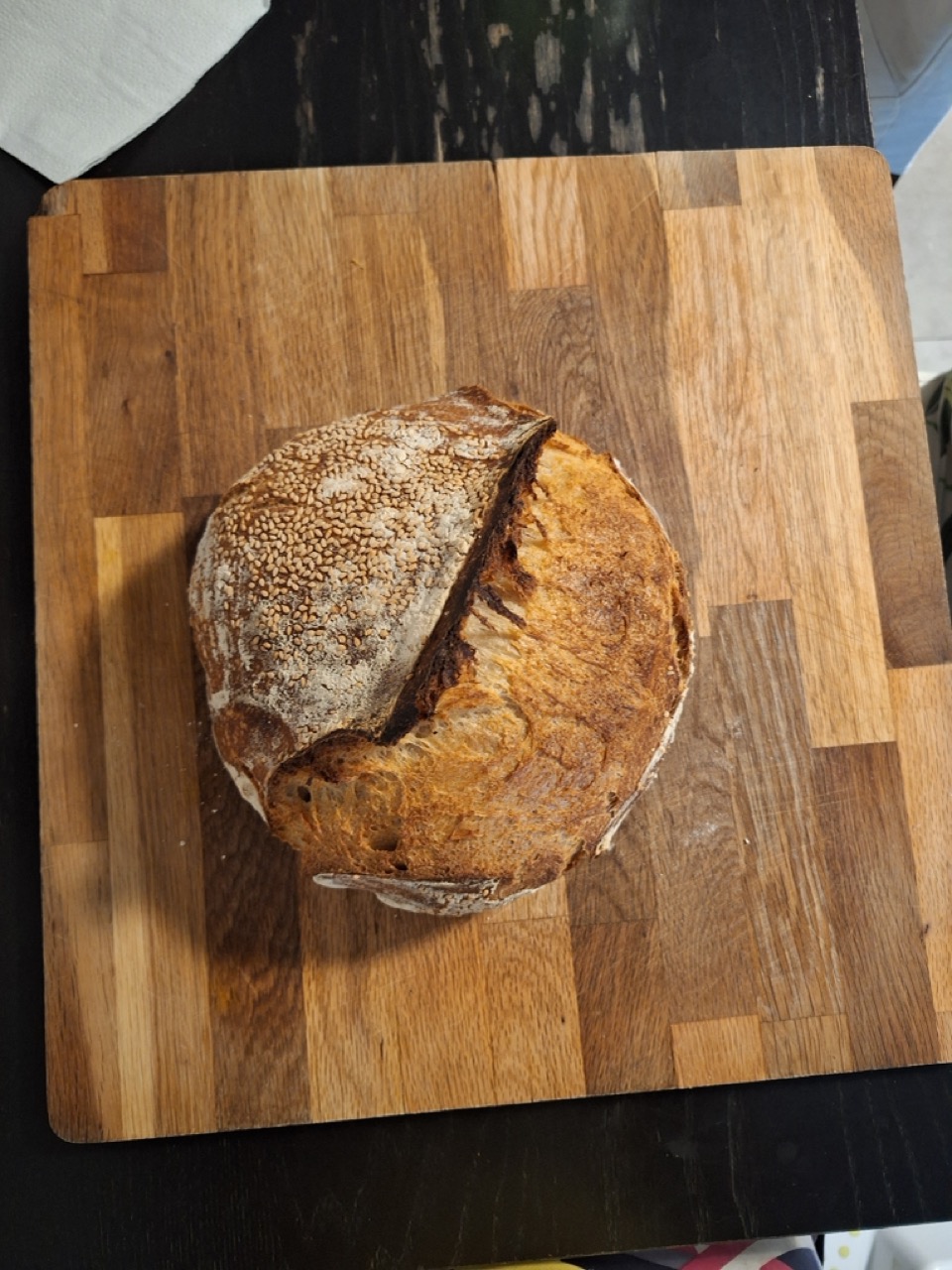
After a long gap, the loaf that finally matched the picture in our heads — a clean ear, a scatter of semolina freckles, a confident round. Lessons 9 to 12 quietly clicking into place.
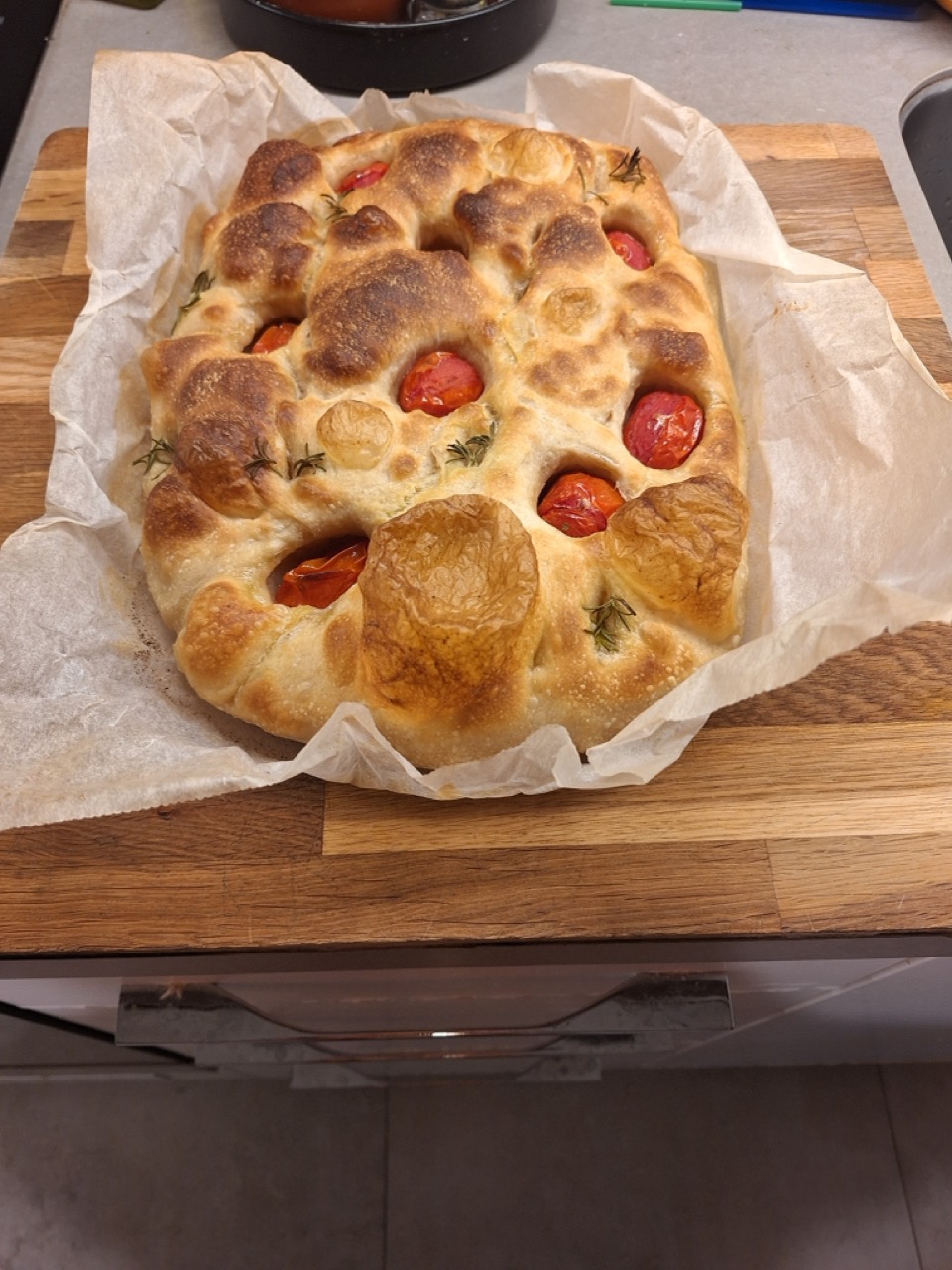
Cherry tomatoes, rosemary, a flood of olive oil. Focaccia forgives almost everything a boule punishes — a good reset on the weeks the starter felt temperamental.
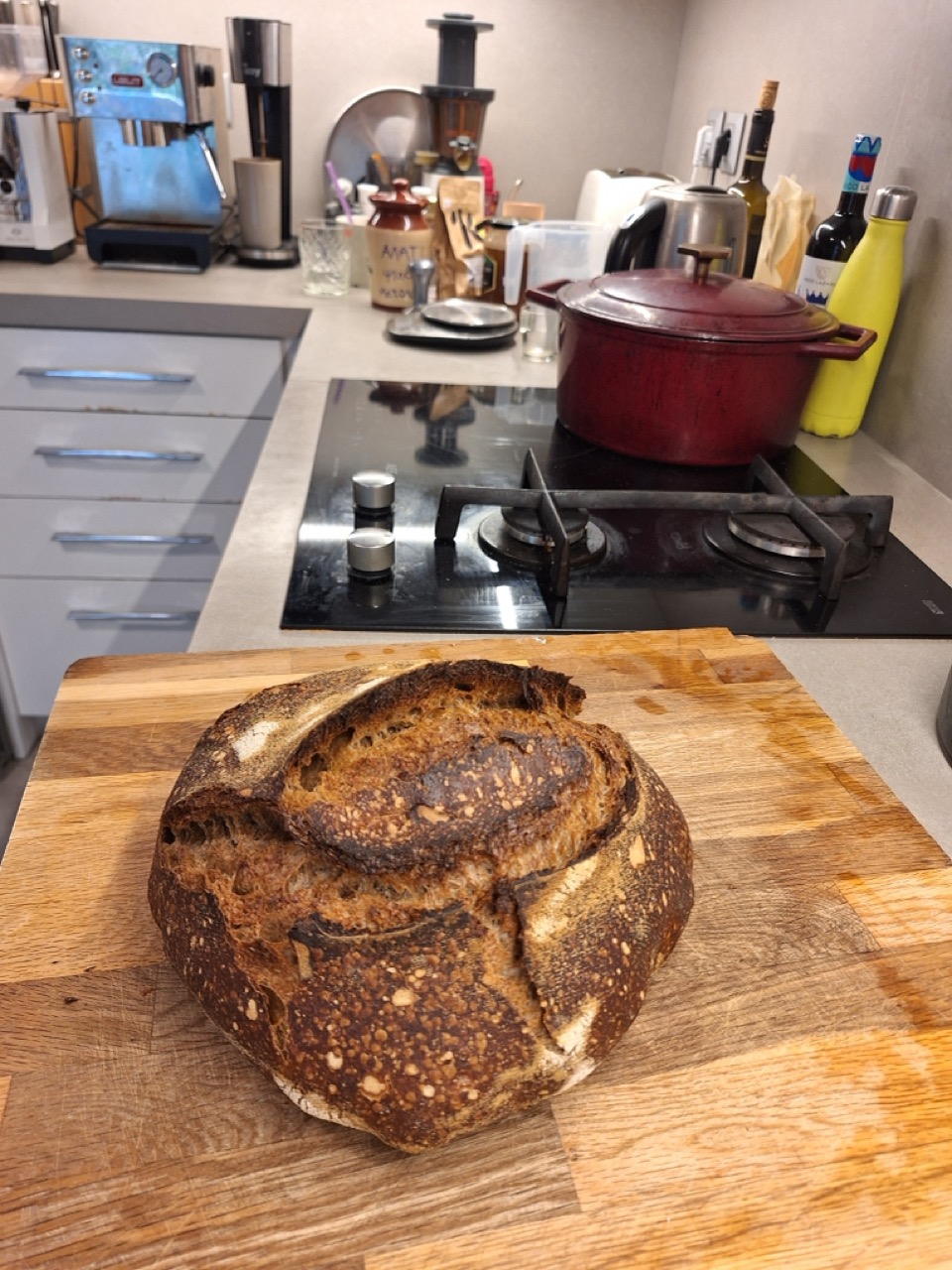
Baked to colour rather than the timer (lesson 14). A dark, blistered crust and a high, proud rise — the Dutch oven finally earning its place on the shelf.
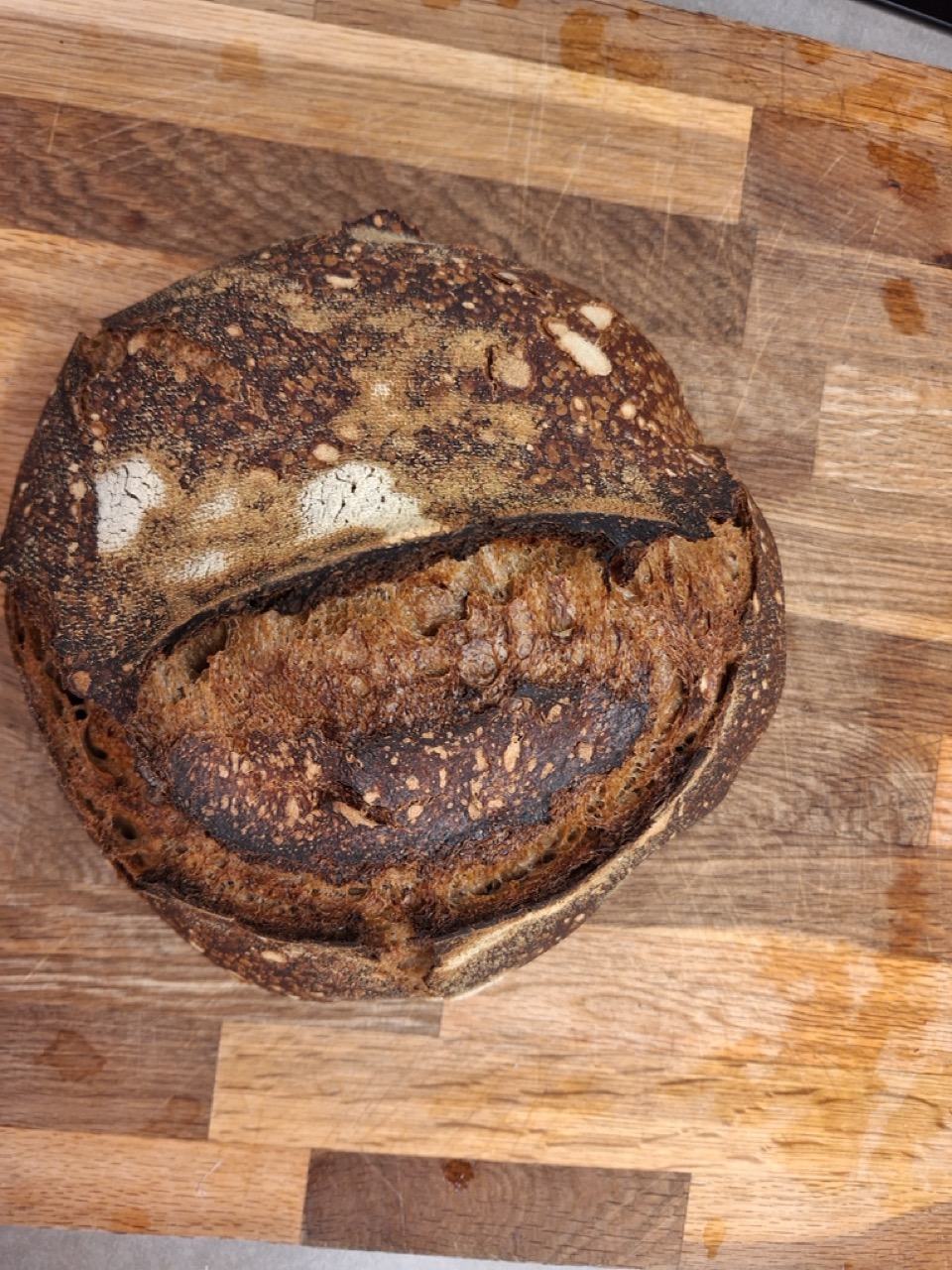
Chasing that dark crust, we left it in too long. Half char, not flavour — lessons 13 and 14 written into a single loaf. Photographed anyway; that's the point of a journal.
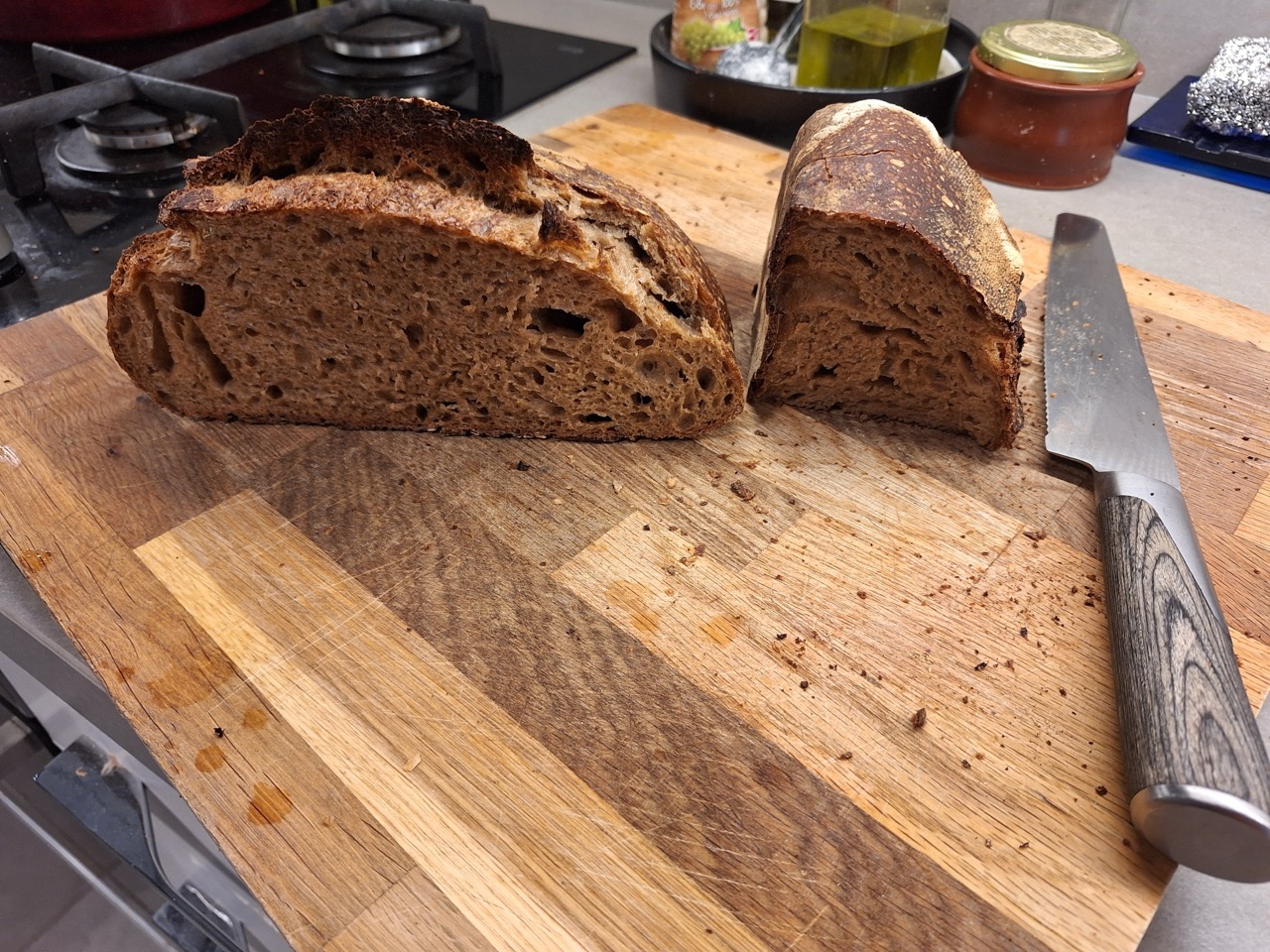
The only verdict that counts is the cut. Open, fairly even, springy — proof the proof was (mostly) right. Still chasing a more uniform structure for next time.
Borrowed, gratefully, from Mike G's guide to sourdough mistakes — and then confirmed, one by one, in our own kitchen.
Feed it on a schedule — daily, ideally twice a day when you're baking. A sluggish starter has no power to raise a loaf.
Mix flour and water and let them rest 45+ minutes before the starter goes in. It builds gluten while you do nothing.
Weigh every ingredient as a percentage of the flour. Suddenly any recipe scales and adjusts cleanly.
Start at 70–75%. Dough above 80% is a sticky, demoralising mess while you're still learning the feel.
Use it domed and roughly doubled. Past its peak it has already spent the lift you needed. Float-test if unsure.
Stretch and fold every 30 minutes for about two hours. Hard kneading knocks out the air you're trying to keep.
The dough tells you where it is — shinier, smoother and rounder with each fold. Watch it, not only the clock.
Cold-proof in the fridge overnight. It bends bread around your life and deepens the flavour while it waits.
Use a bench scraper as a second, non-stick hand. Too much flour stops the dough sealing to itself.
Flour the basket generously. A loaf stuck to the banneton loses its shape the moment you turn it out.
Aim for a taut, tight surface without deflating the dough. Find the motion that fits your own hands.
Poke about an inch deep. A dent that springs back slowly means it's proofed just about right.
Slide a spare tray under the Dutch oven for the last 20 minutes. (We have photographic proof of forgetting — see Bake 06.)
Bake to colour, not to time. Ovens lie — aim for a deep, dark, confident brown and trust your eyes.
It is genuinely hard. Every disappointing loaf teaches the next one. Keep a jar going and keep baking.
Every loaf here rises in a small kitchen on Tinos. The slow life that made room for sourdough is a story of its own.
🇬🇷 Read the Tinos story →