Ten Months in TinosFrom autumn heather to summer thyme — a family school year on a small Greek island
We moved to Tinos in September 2025 so I could teach at the local school. Ten months, a full seasonal turn, and a family that came home to Athens knowing the island by its wild flowers.
📖 6 min read🗓️ July 2026📍 Tinos, Cyclades, Greece
▶ Watch first · our arrival
Before the words — the very first days on the island, filmed as we arrived.
During the 2025–2026 school year, we moved from Athens to Tinos so I could teach at the local school. We packed the car, took the ferry, and spent ten months on an island that most people only see from the deck of a passing boat.
Coming back to Athens now, with the boxes half-unpacked and the summer noise of the city settling around us, I wanted to sit down and organise the photos before the year blurred. The easiest way I found to tell it is by what was in bloom.
Tinos is a windy, marble-quarried, dovecote-covered island in the Cyclades — small enough to know its people, big enough to still surprise you on a Sunday walk. Between September and June, the same hillsides changed color three times. What follows is a walk through those months, in flowers.
The story at a glance
When: September 2025 → June 2026
Where: Tinos, Cyclades, Greece
Family: Two adults, kids in the local school
What we saw: Autumn heather at Livada · Summer thyme at Panormos and Agia Thalassa · A whole lot of wind and salt
• • •
September — arriving at Livada
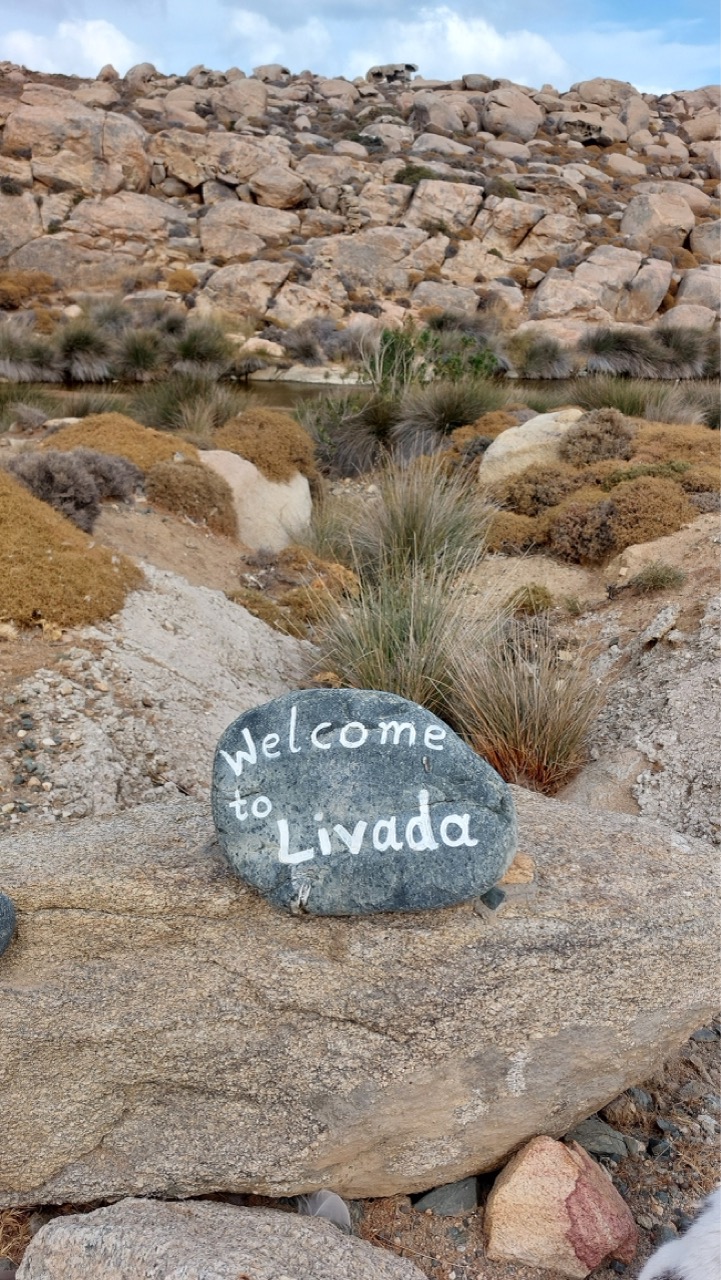
Our first weeks on the island were about learning the roads. Livada — a small wind-carved bay on the eastern side of Tinos — became our default Sunday walk almost by accident. The road ends, the sea begins, and there is a stone that someone painted with white paint that just says Welcome to Livada. We took the photo without thinking about it. It's the one I keep going back to.
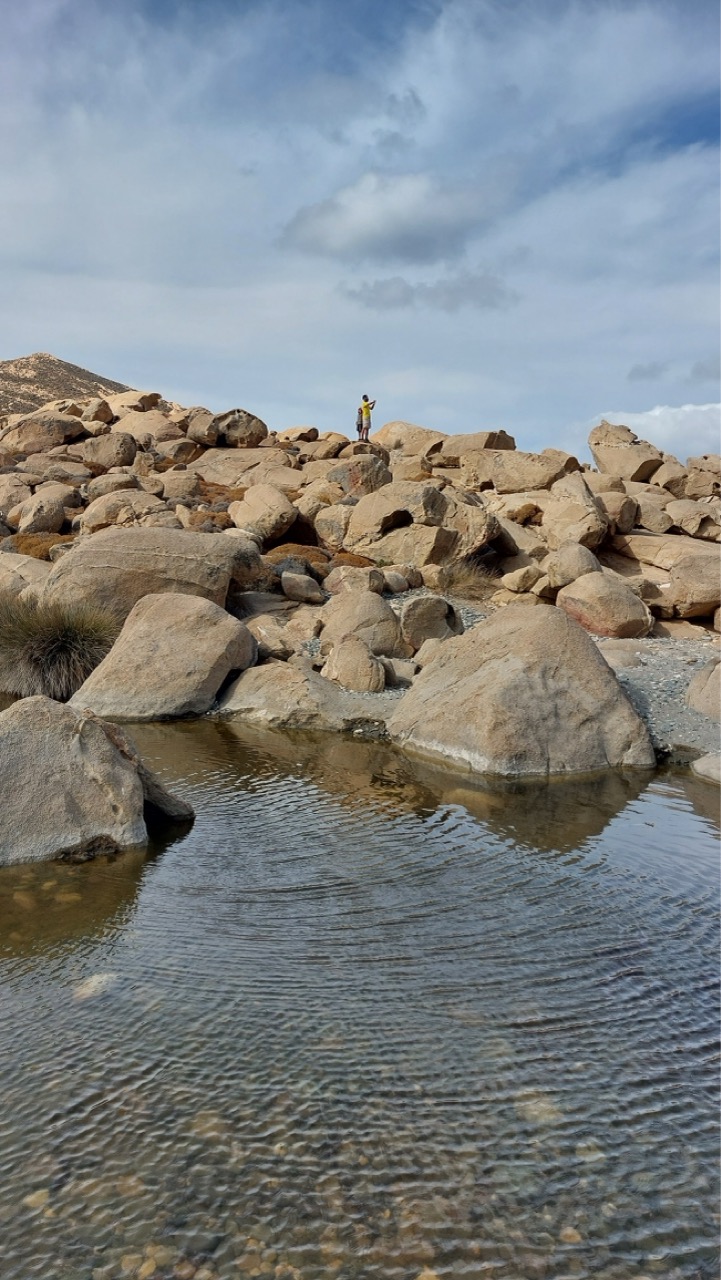
The stone that greets you at the end of the road. Painted in white by someone who lives close by — nobody has claimed it and nobody needs to.Late September at Livada. The wind rests for an hour a day and the water goes glass. You can walk from boulder to boulder without your feet touching sand.
October — the heather turns the hillside pink
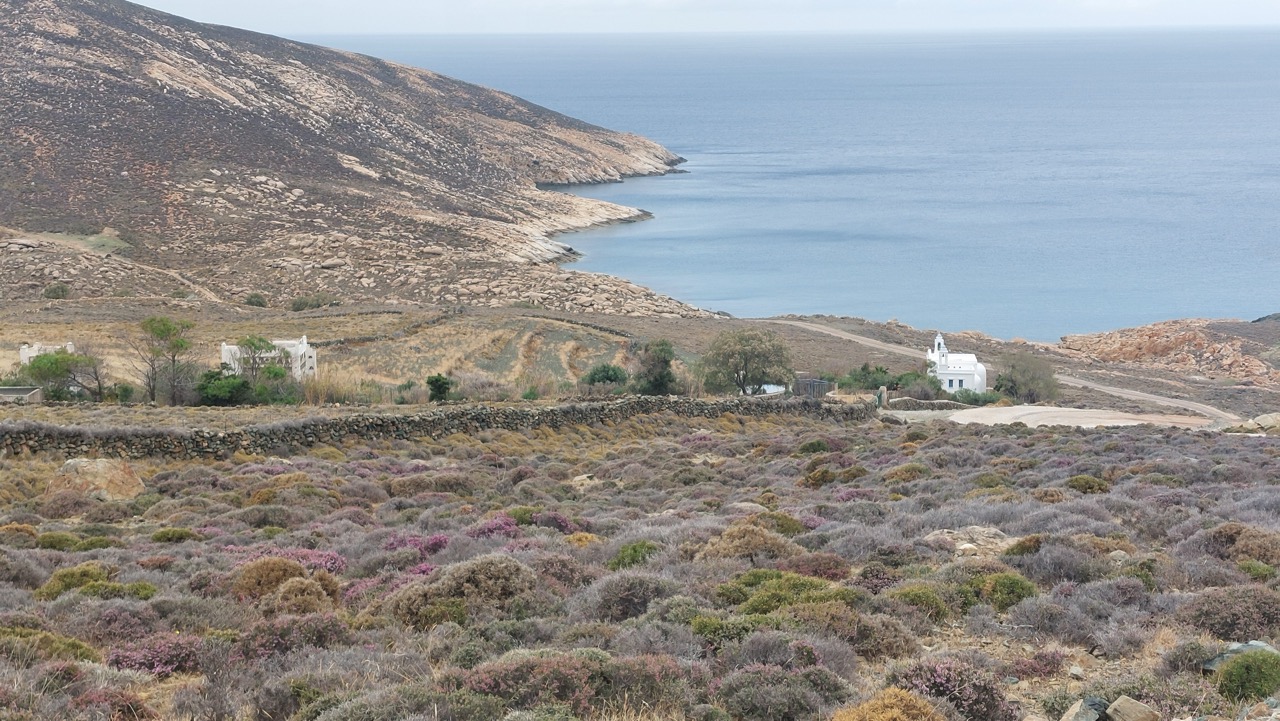
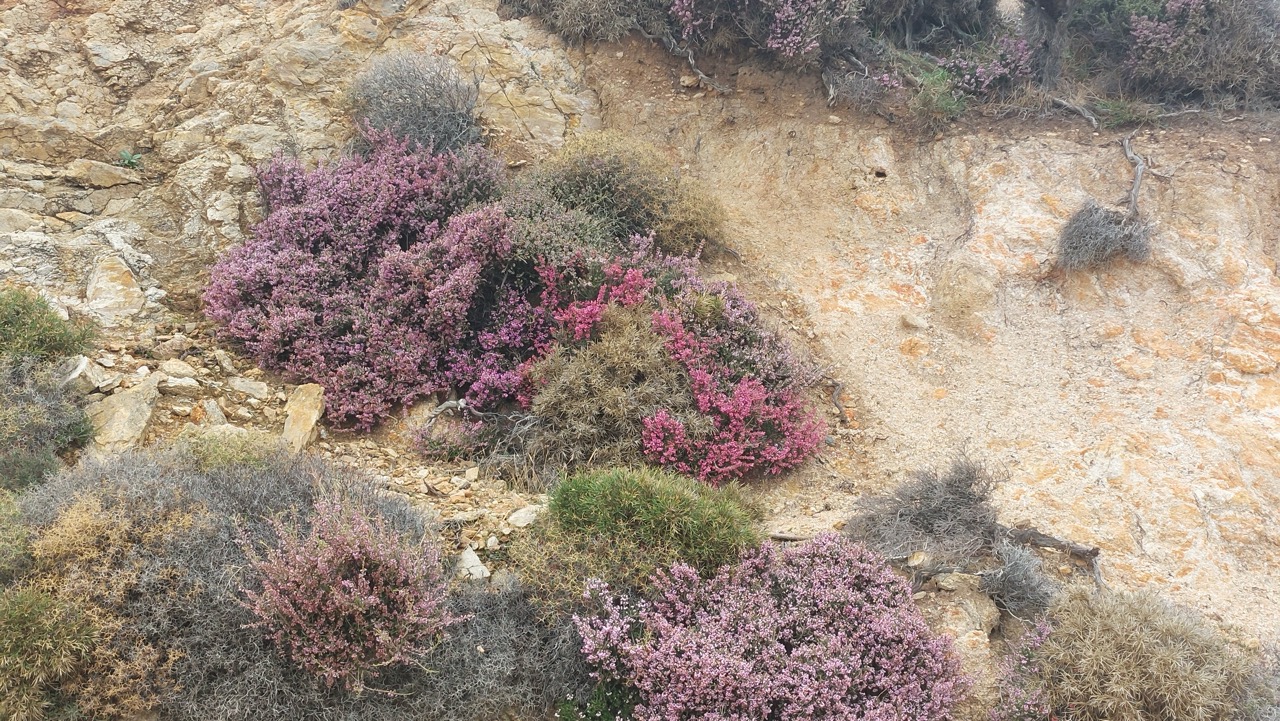
By mid-October, the slopes around Livada change. What looked like brown scrub in September puts out tiny pink and purple flowers, and suddenly the whole hillside above the beach reads as violet from a distance. It's Erica manipuliflora — autumn heather — and it blooms from September to November across the Cyclades.
The first time I saw it I stood in the middle of the field for a long time. Nobody had told me the Aegean does autumn colors. It does — you just have to be looking down instead of up.
The Livada slopes in October 2025. A white chapel in the middle distance, the Aegean beyond, and everything in between blushed pink for a month.Up close: Erica manipuliflora. It grows in tight cushions between the rocks, gets by on very little water, and does most of its living in six weeks.
• • •
Winter — the quiet months
November through February on Tinos is different from what the postcards show. The wind gets serious. The tourist tavernas close. The bakery in the village becomes a kind of communal living room. School days settle into a pattern of long drives home in the dark, warm kitchens, and a level of quiet you forget exists when you live in Athens.
We didn't take many landscape photos in winter — the weather rarely felt photogenic, and honestly we were too busy being cold. But those were the months where the island stopped being a place we lived and became somewhere we belonged. The neighbors knew the kids' names. The car mechanic knew our licence plate. Someone always waved.
June — thyme, and the walk to Planitis
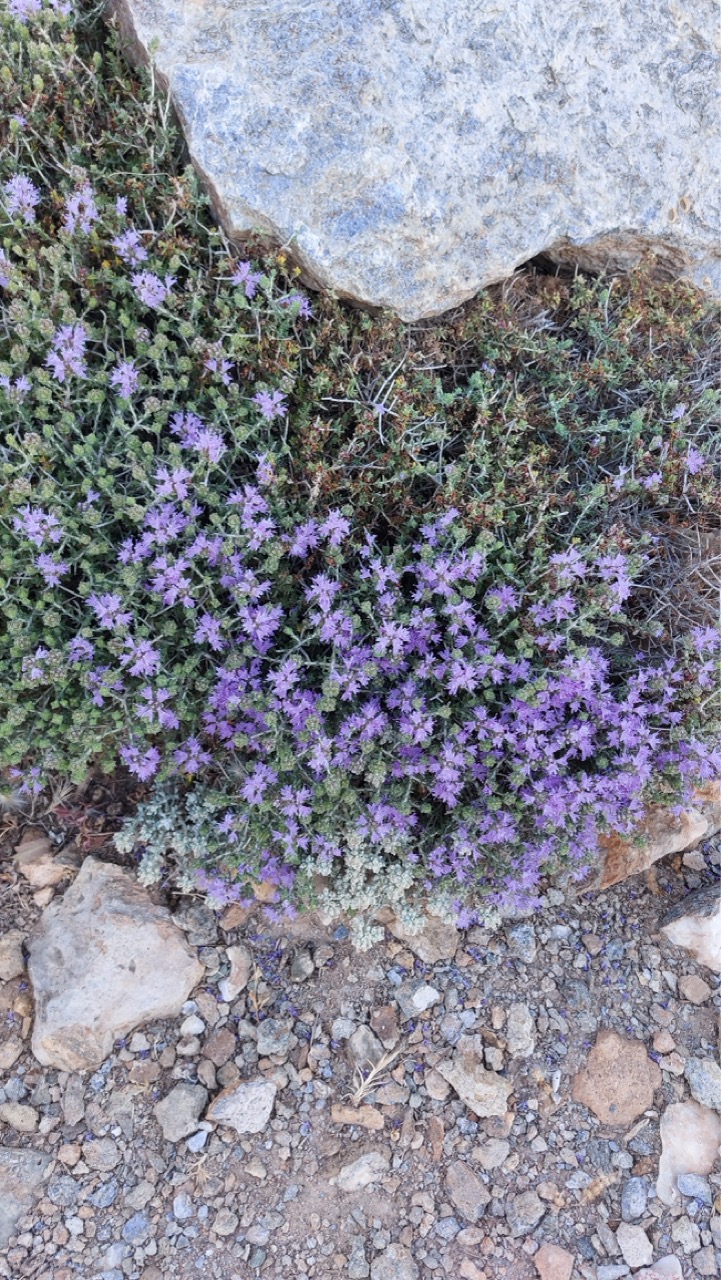
By June the whole cycle turns again. The heather is long gone; in its place, the hillsides fill with wild thyme (Thymbra capitata). The smell hits you before the color does — you brush against a bush walking to the car and your hand smells of thyme for an hour.
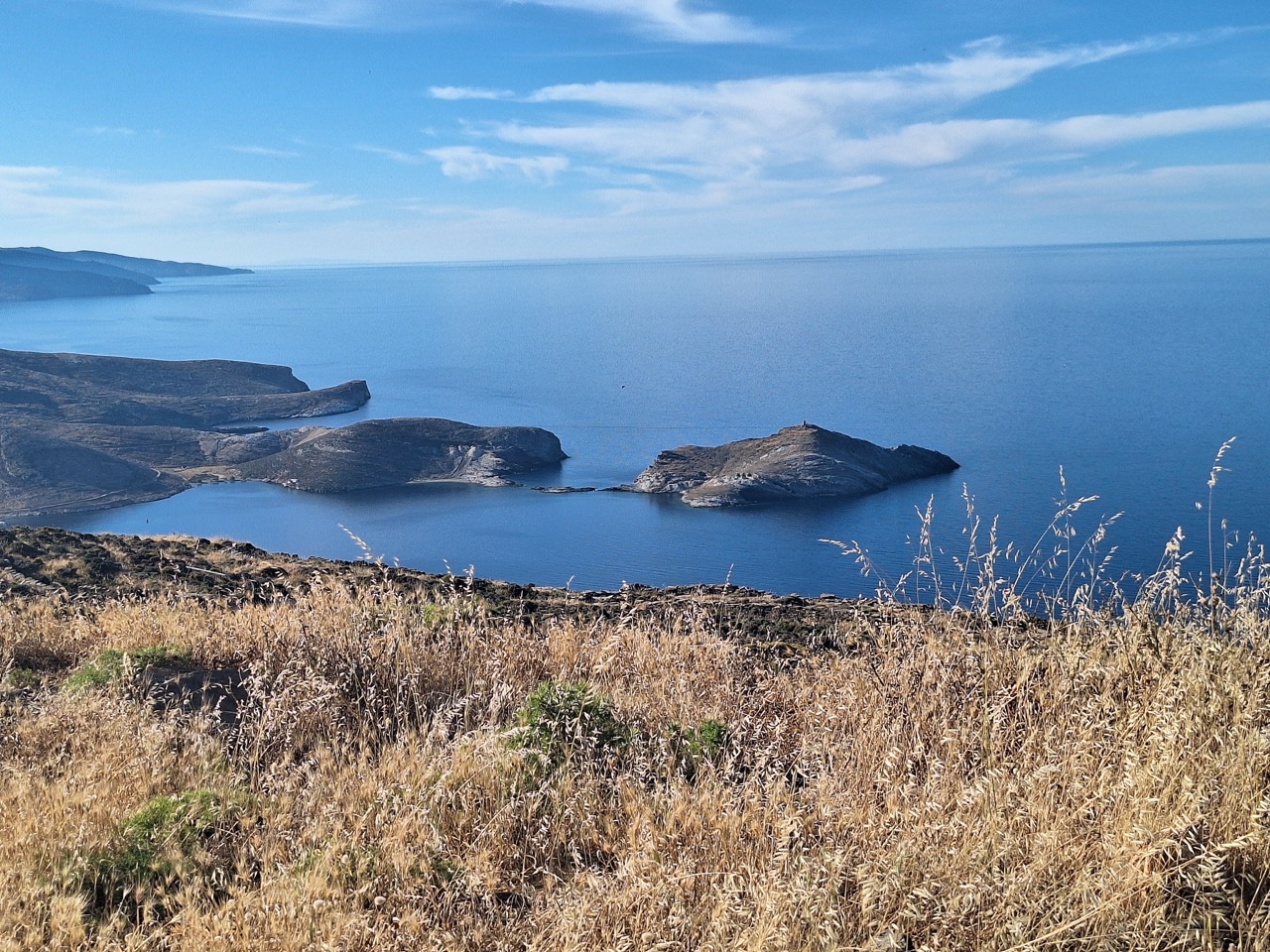
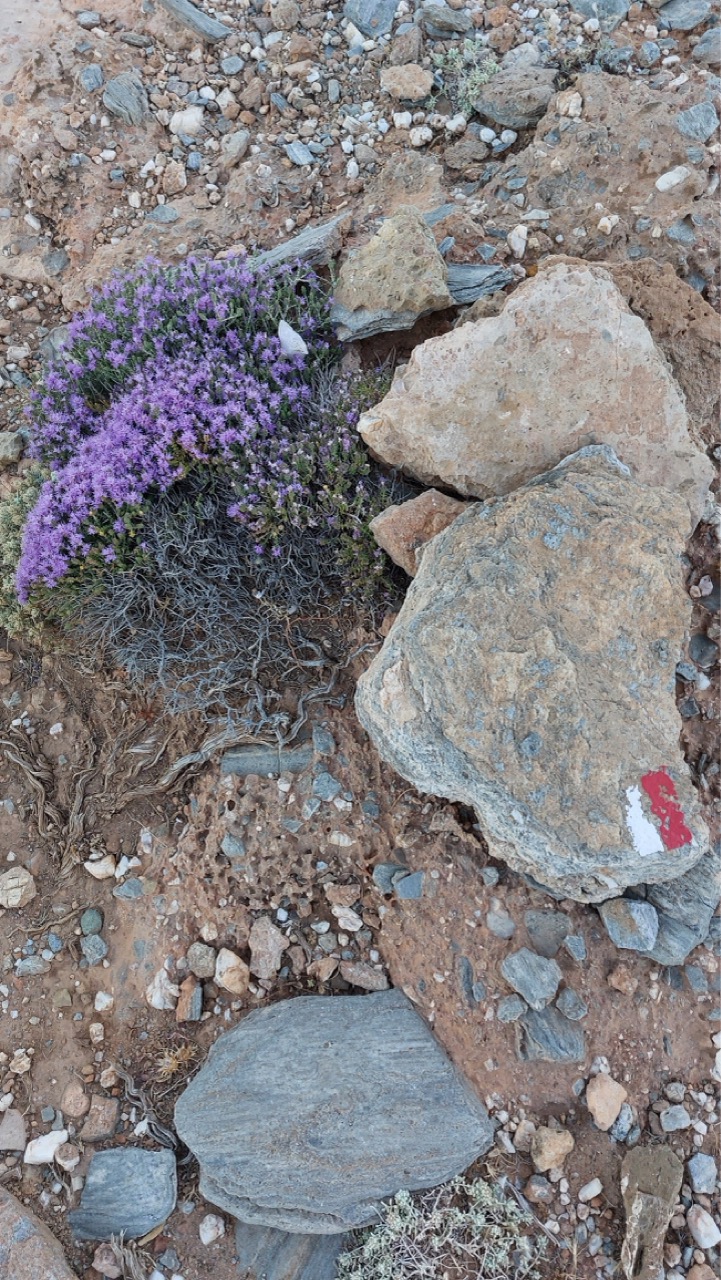
Our favorite last walk of the year was on the coast path toward Planitis, past the tiny chapel of Agia Thalassa. The trail is marked with the red-and-white flashes that anyone who's hiked in Greece knows on sight. The whole ridge was flowering, the bees were loud, and the sea below Panormos was the color the postcards do get right.
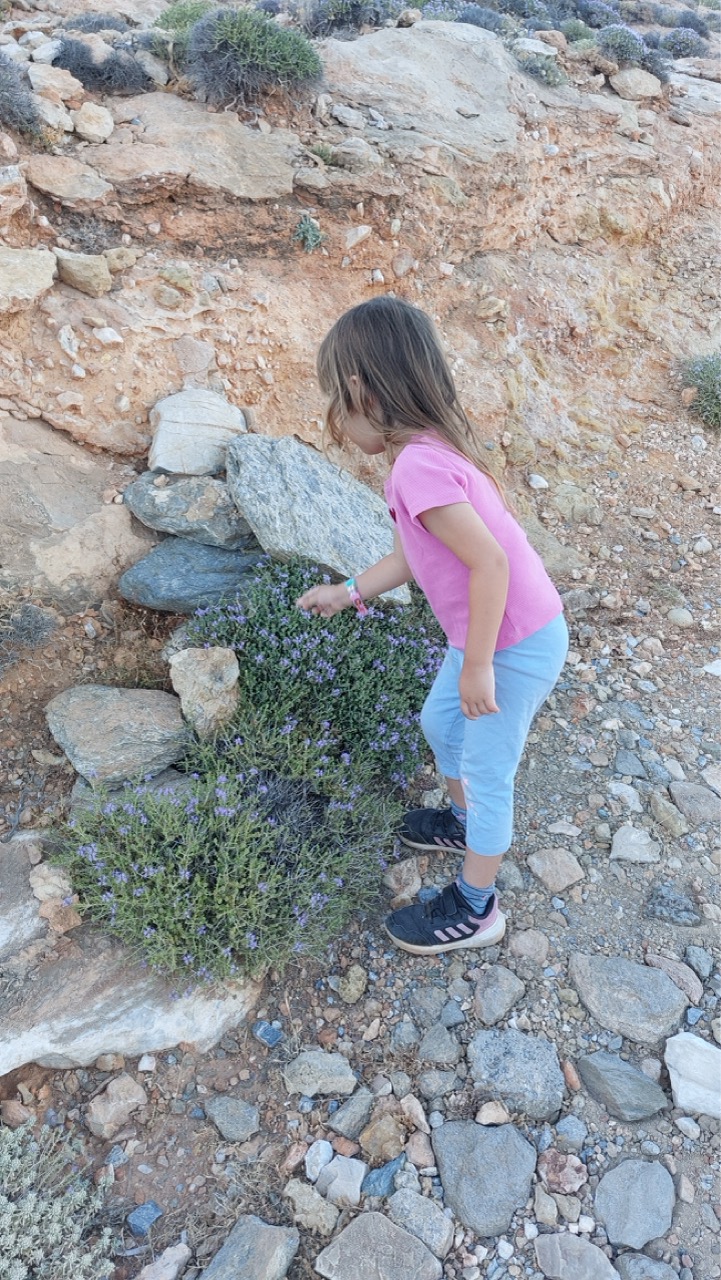
The view down toward Planitis from the coast path above Panormos. June light, June sea, June grass — everything ready for the long dry summer.Wild thyme in full flower. It grows anywhere the wind and goats let it — which is almost everywhere on Tinos.The red-and-white blazes that show you the way. Every marker on this island has a plant living next to it.Our daughter meeting the thyme for the first time. She spent the walk home telling us the smell was on her hand and not in the wind — she was right.
• • •
What we're taking back to Athens
We came to Tinos for the job, but we're leaving with something else. The kids know how a chapel bell sounds carried across a valley. They know the smell of thyme and the color of heather. They know a dozen names of people they will run to hug when we come back, because we will come back.
If you're thinking about visiting Tinos — and I hope you are — come outside the peak summer weeks if you can. October, for the heather and the last warm swims. Late May or June, before the meltemi wind picks up in July, for the thyme and the empty trails. Rent a car, take the coast road, walk somewhere the tarmac ends. The island doesn't perform for you. It just gets on with what it's doing.
Ten months in, and it turned out to be one of the best decisions our family has made.
Tell Famila.Travel your dates and your kids' ages — it builds an itinerary around your family, so days like these end up on your plan and not just in someone else's story.