
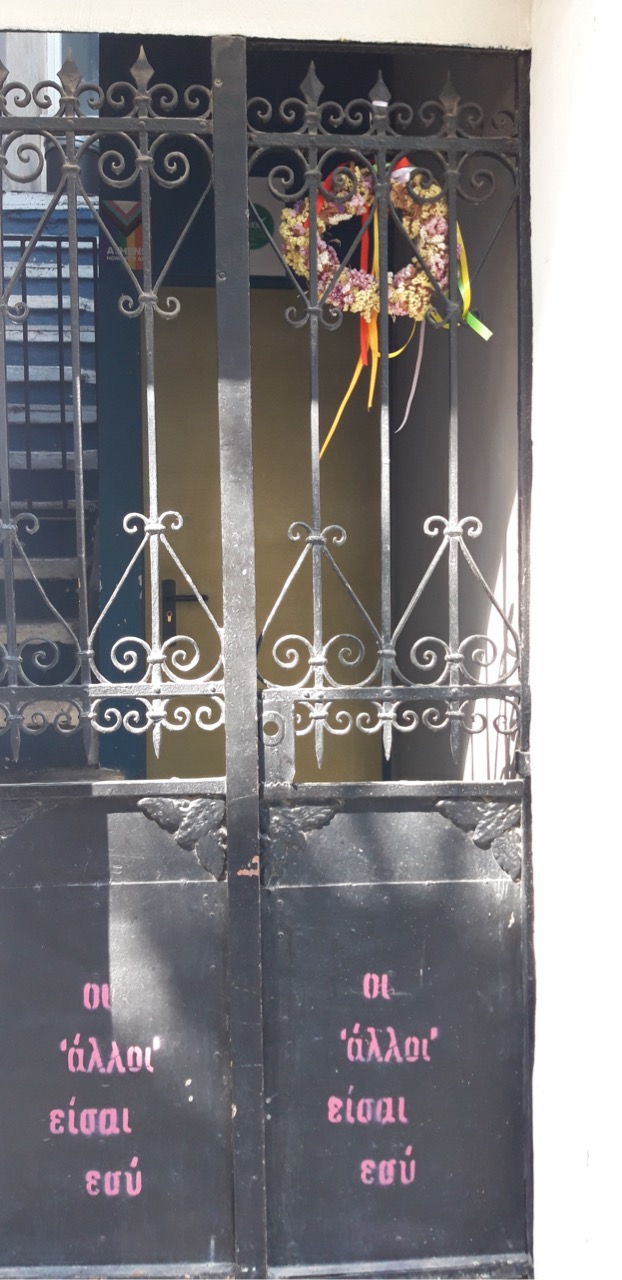
A sign — a placard, a notice — shows us information, directions, warnings, or identity for a place, an object, a rule. Its exact purpose depends on where it sits and what shape it takes. In cities, beyond the official traffic markings and road signs, we often find graffiti on public walls, stickers slapped on sign posts, stencils sprayed on doors and shop fronts.
Blog · Shot
SignsInformation, warning, identity — and sometimes a story
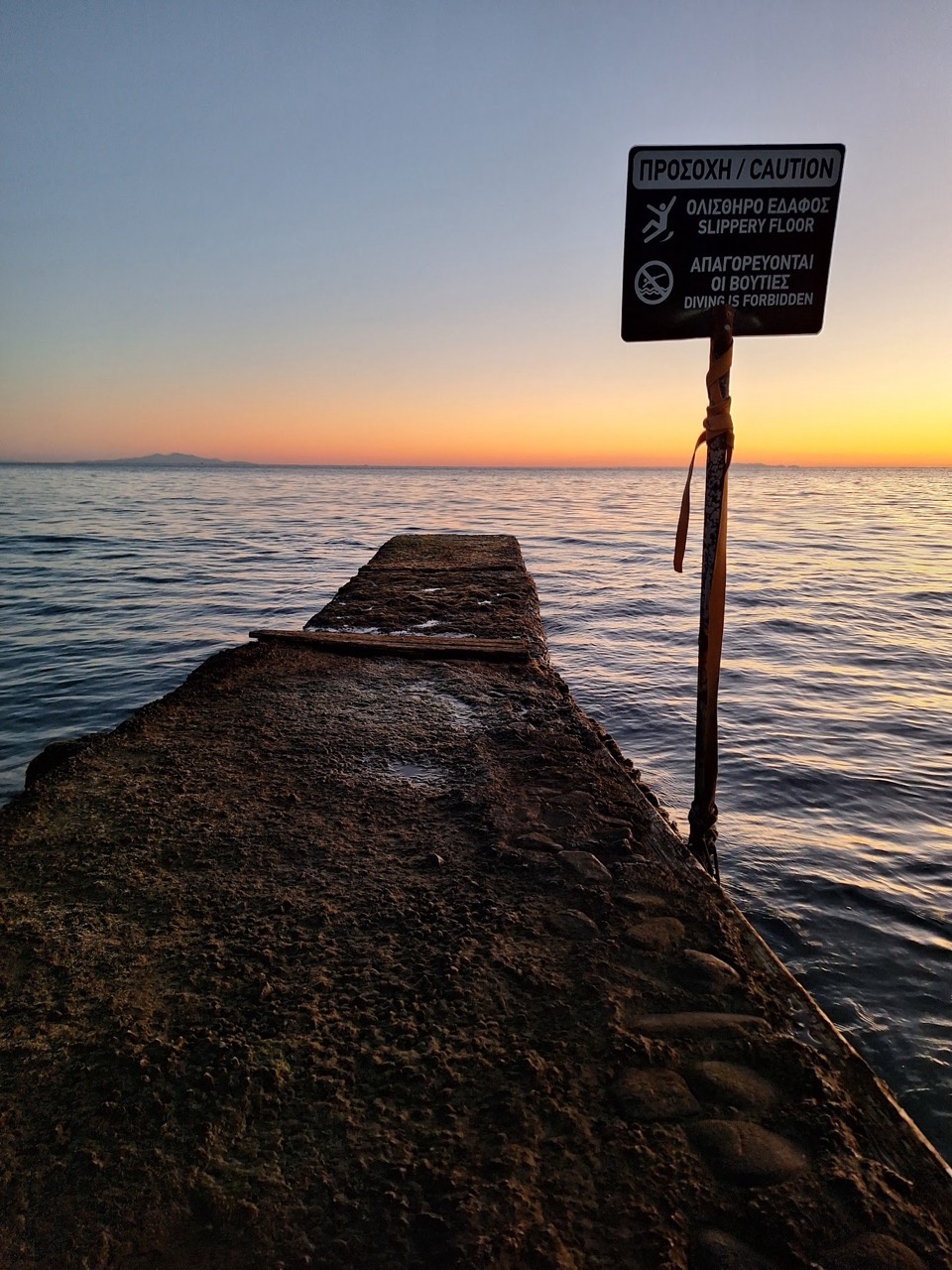
A sign is supposed to be simple: it tells you something, points you somewhere, marks a line. But the ones you remember from a trip are the ones that quietly stop doing their job and start doing something else.
In recent years, key points in cities have been receiving these artistic interventions — turning walls and pedestrian stretches into open-air galleries, according to some, or signposting the destruction of public space, according to others. The argument is older than any of the paint.
On the trail
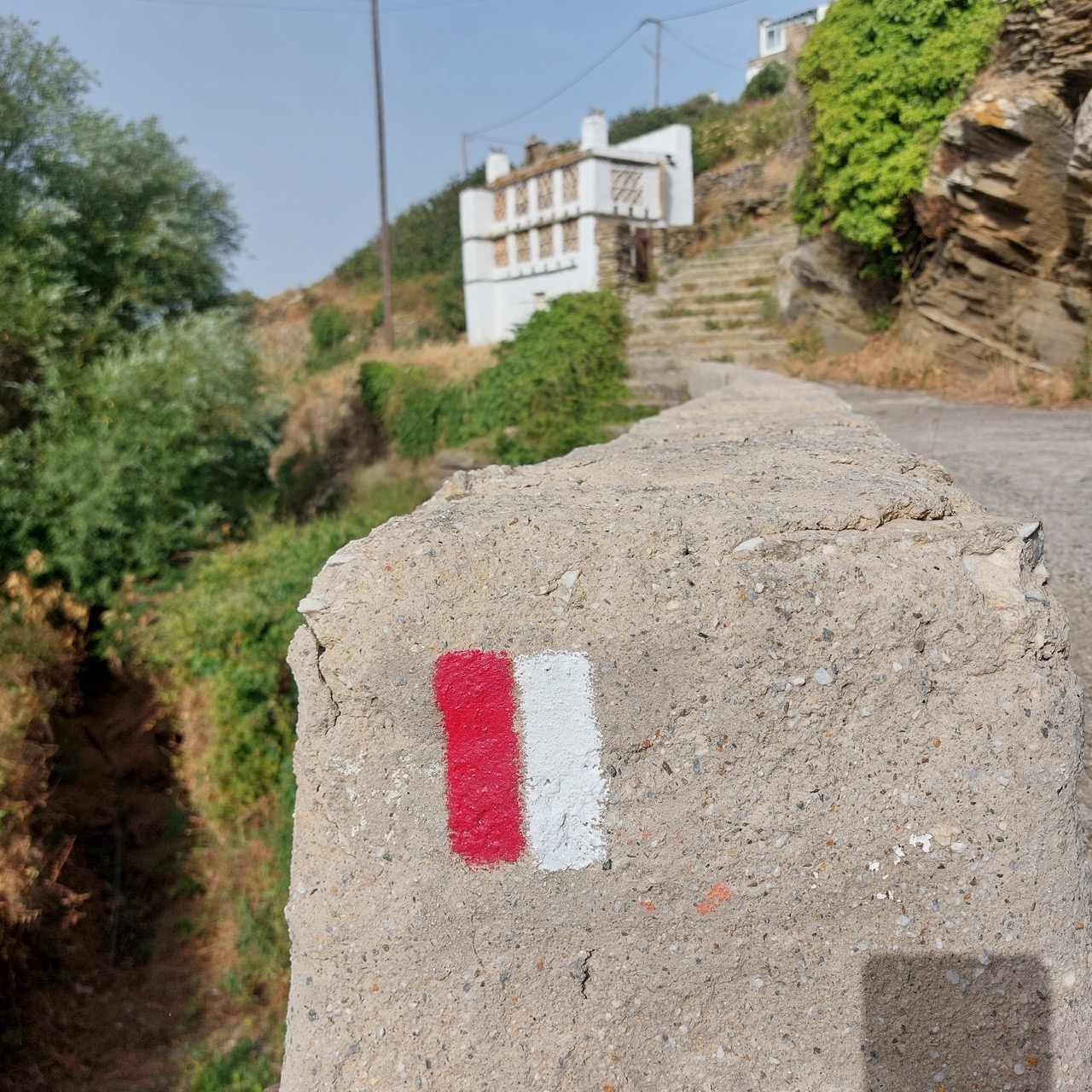
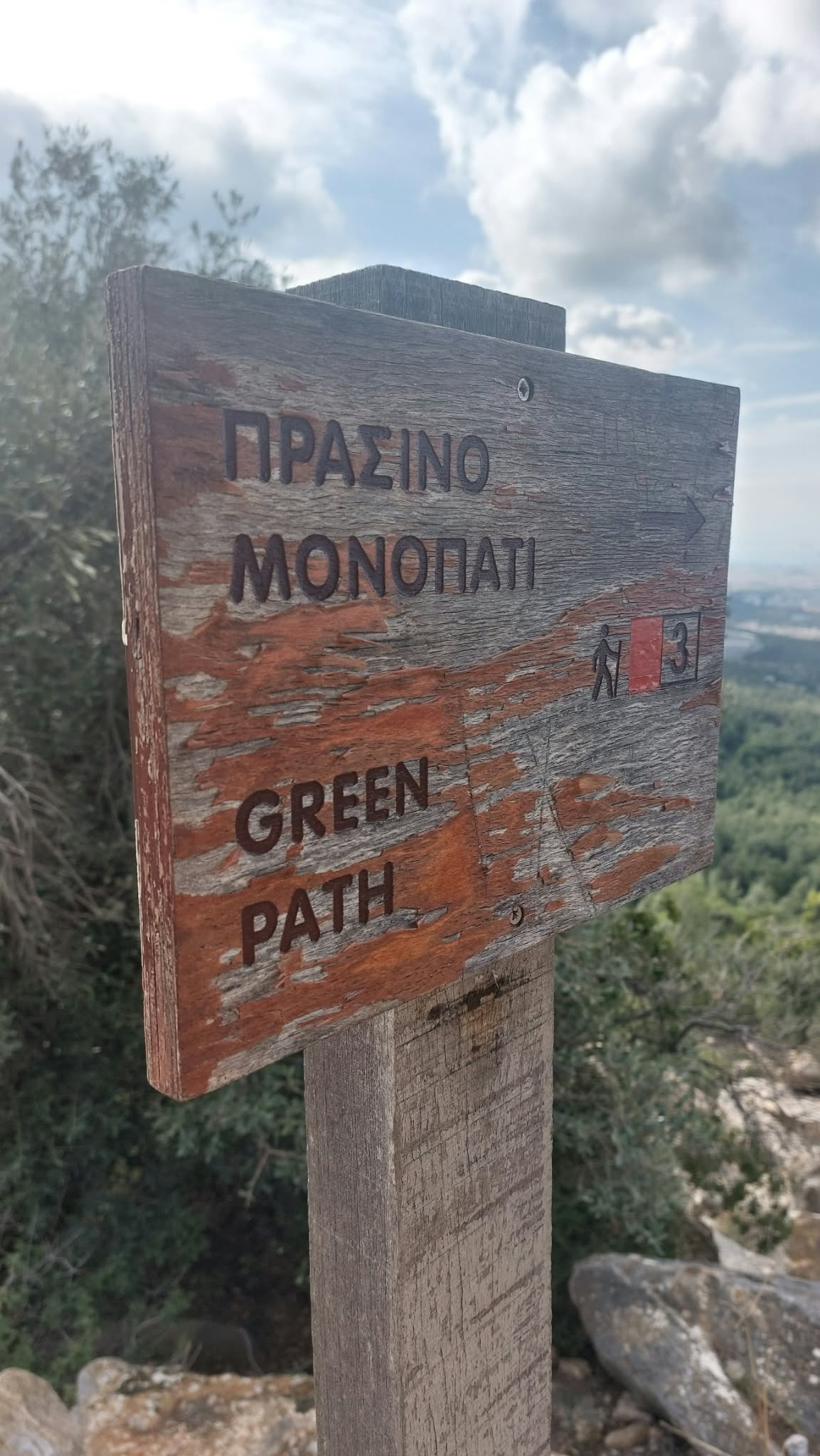
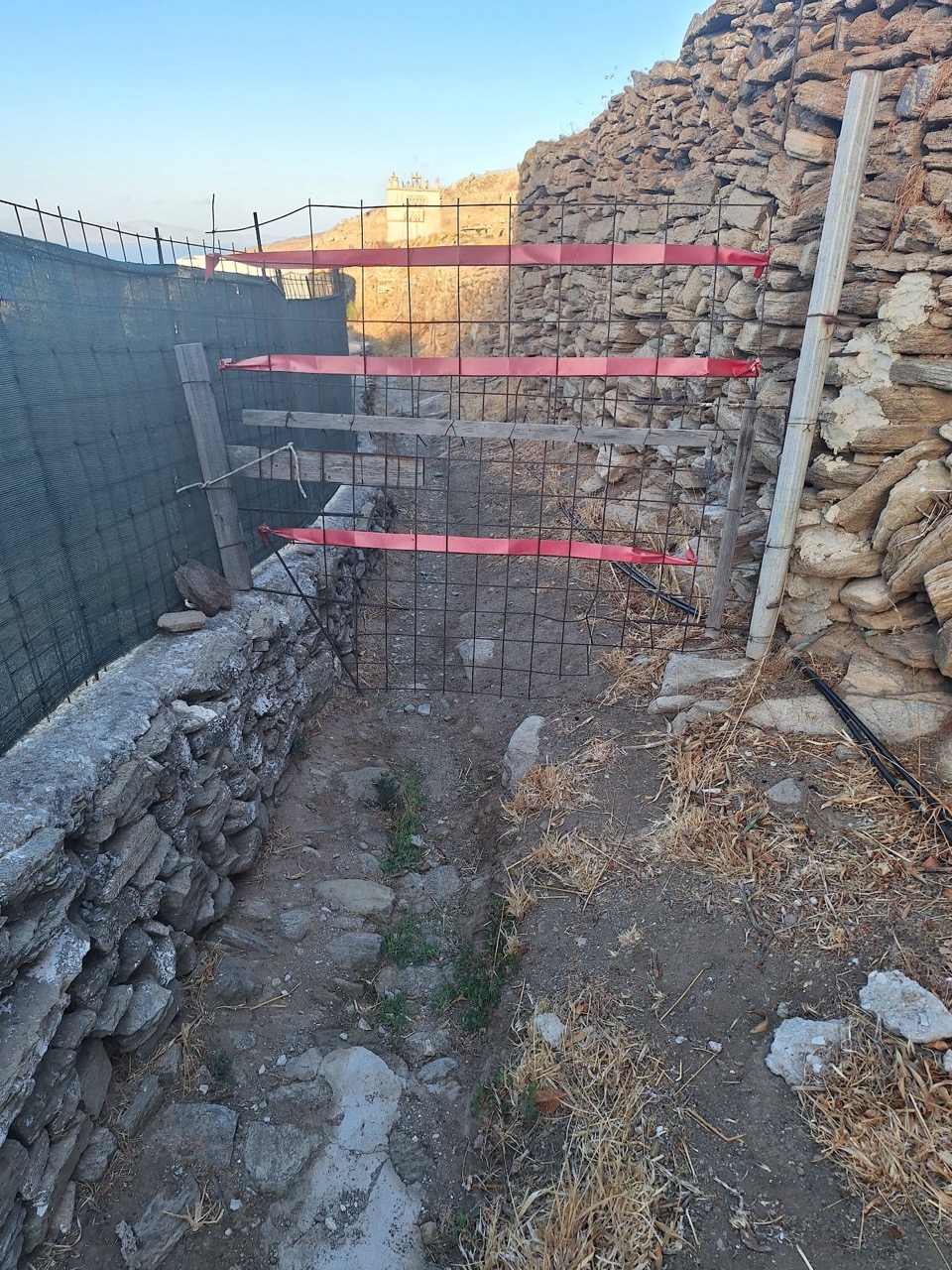
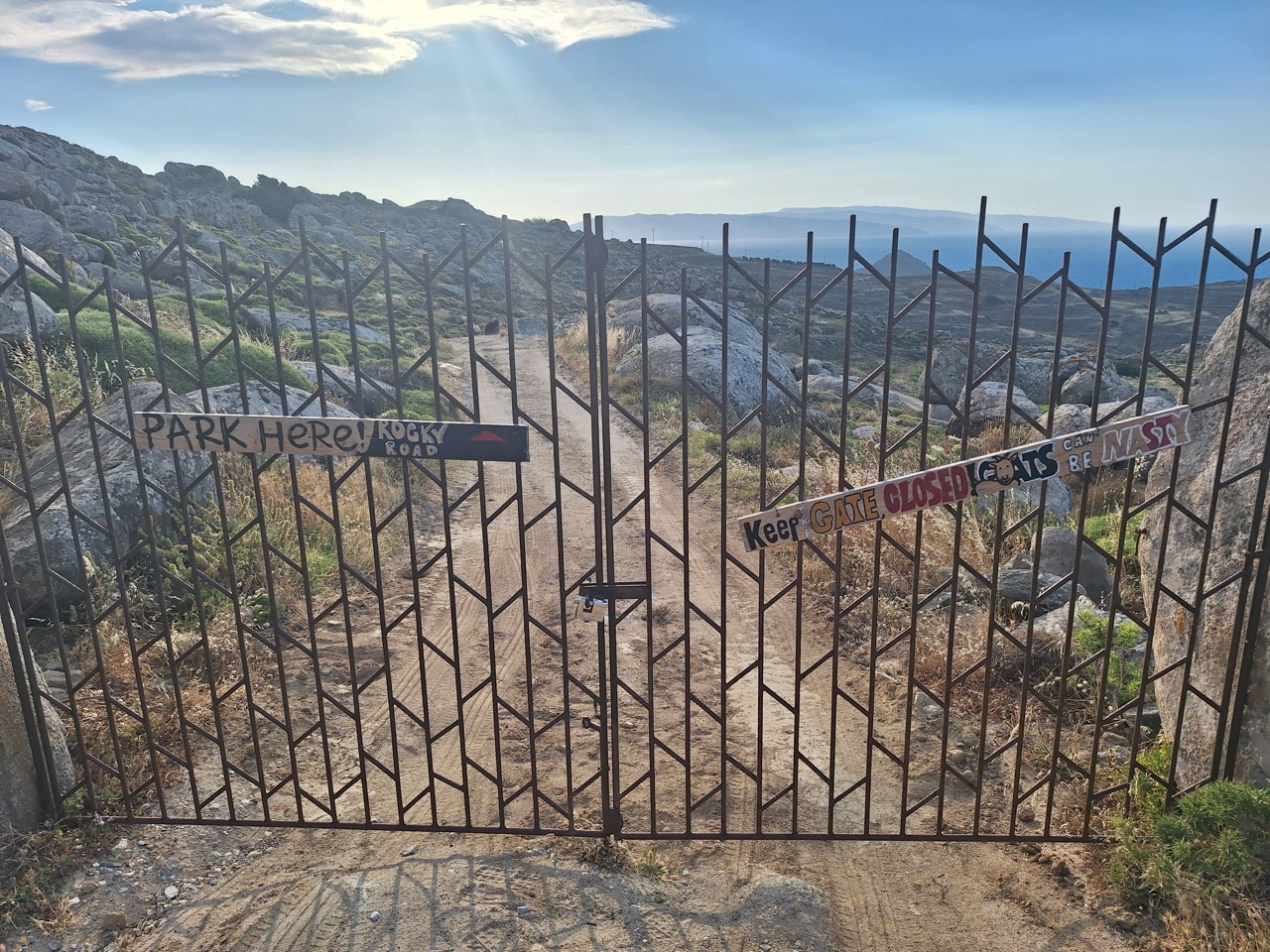
On mountain paths, the signs get specific and modest. Wooden markers with the kilometres left. Painted stripes on rock — the little flags that tell you you're still on the route. Red ribbons tied to tree branches. Small cairns — stones placed one on top of another, the oldest trail language there is. And sometimes a wire pulled across a path on an island, meant to stop the goats from going where they shouldn't.
In the villages
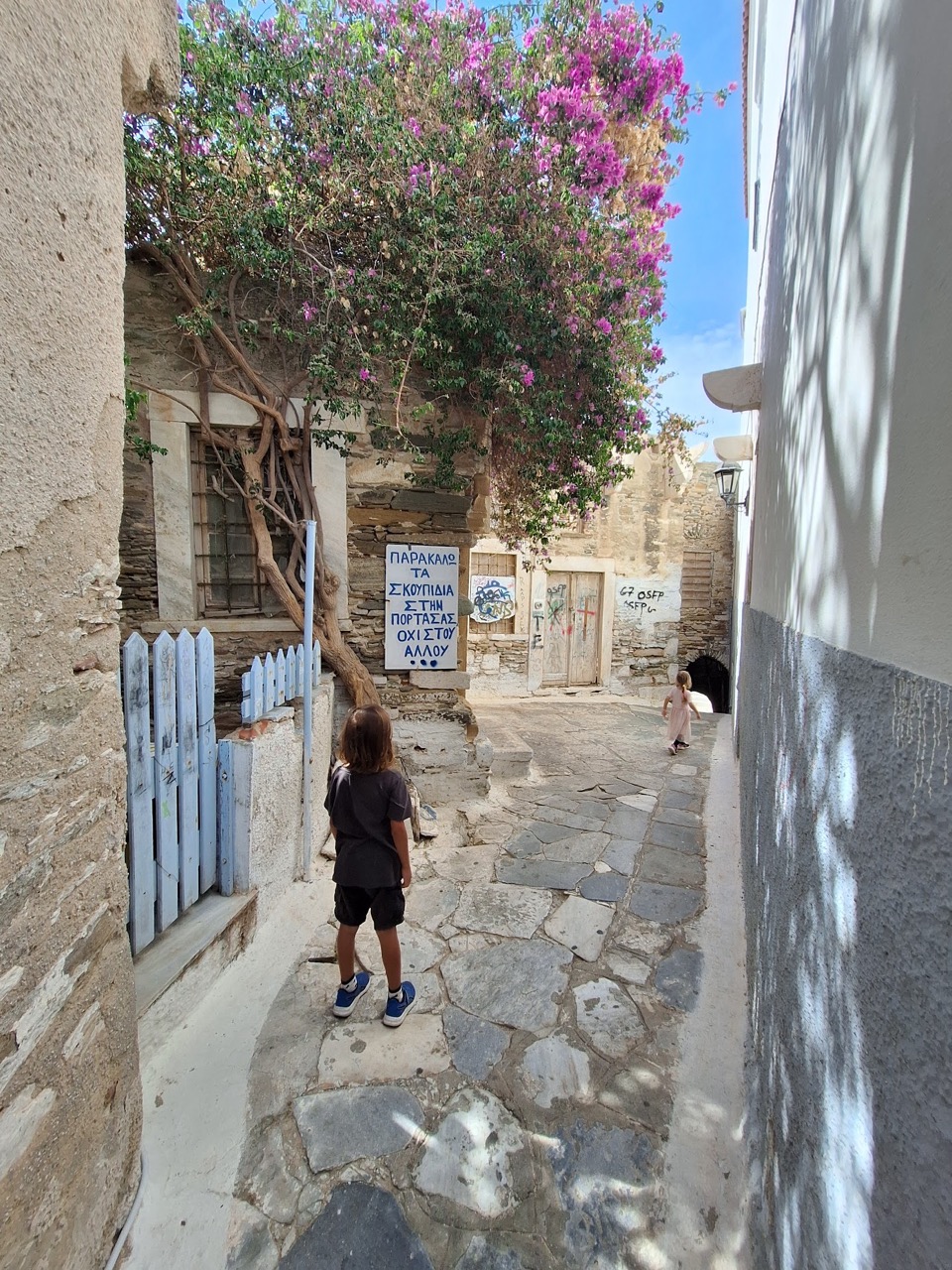
In recent years, in the mountain villages of mainland and island Greece, we see more of these artistic interventions: paintings on walls that play with words, verses painted onto glass, lines from great poets and songwriters, old sayings in a quiet dialect. Carved stones. A marble slab with something unexpected on it.
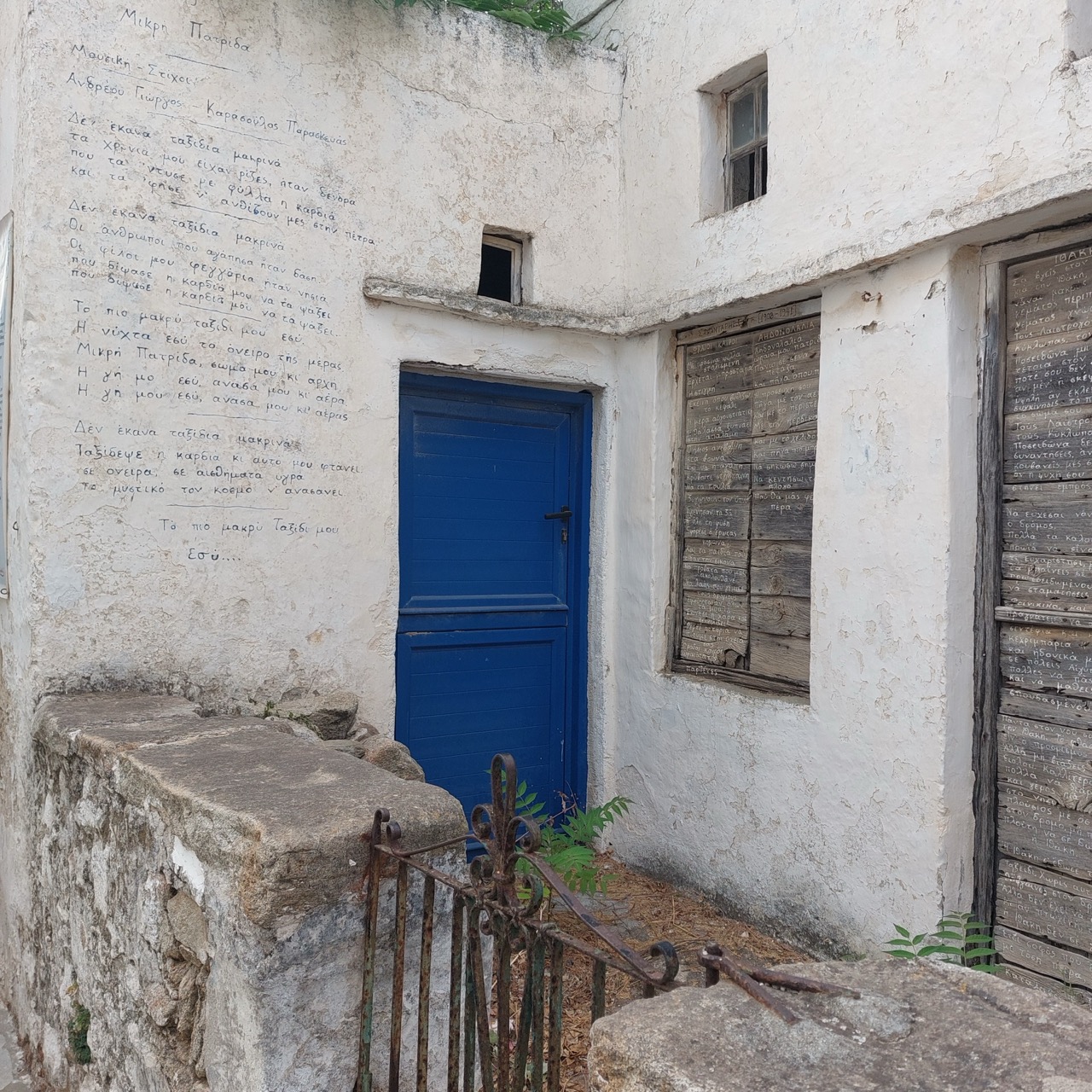
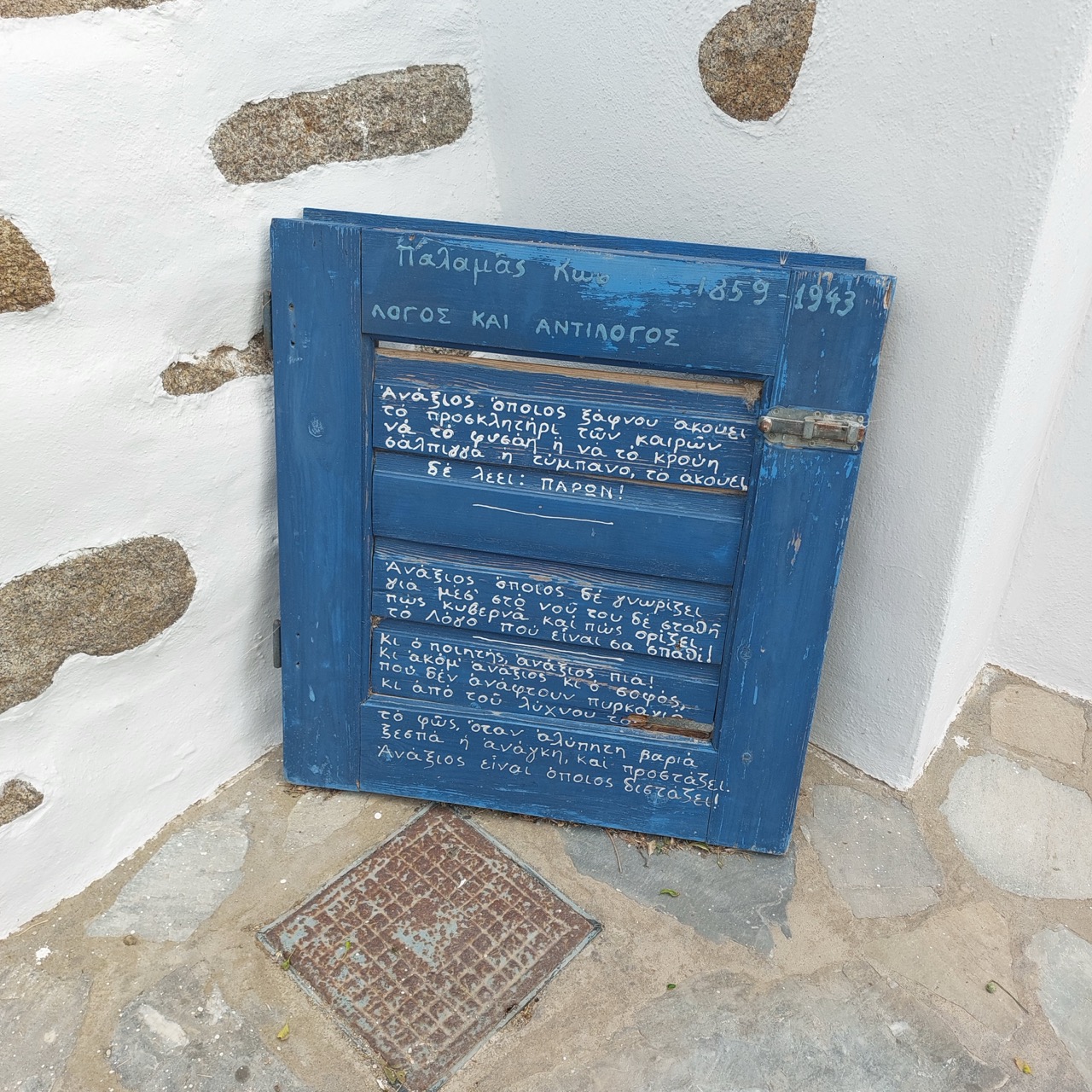
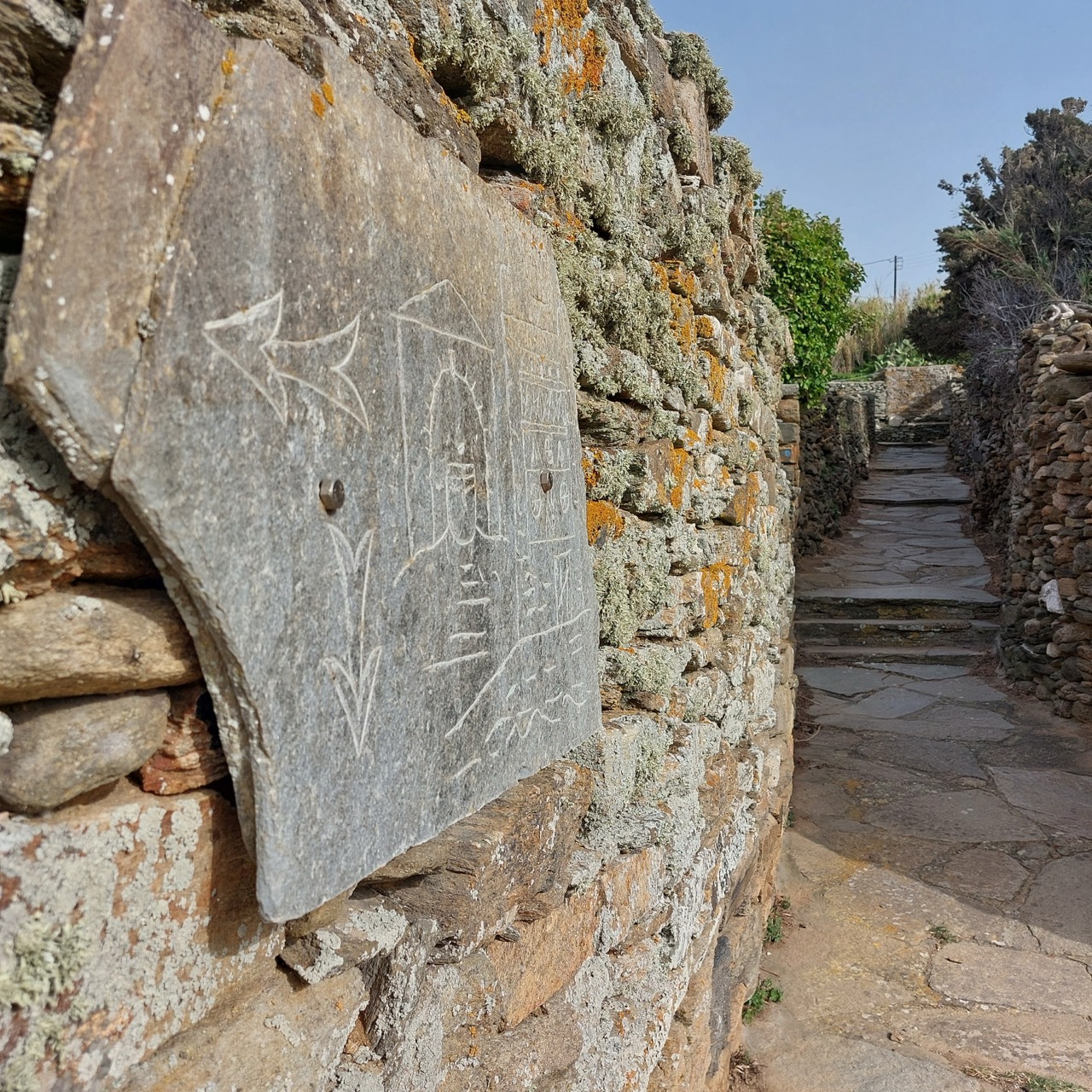
Two of these village-wall pieces are worth pausing on.
Verses · Andreou Giorgos & Karavoulas ParaskevasThe poet says he never took far journeys — his years had roots, the people he loved were forests, his friends were islands his heart longed to reach. The longest journey of all, he tells "you": is you.
Word and Counter-word · Kostis Palamas, 1859–1943When history calls — as a trumpet, as a drum — the only honest answer is "Present!" and action. Palamas says anyone who hesitates is unworthy — not the citizen, not the wise man, not even the poet.
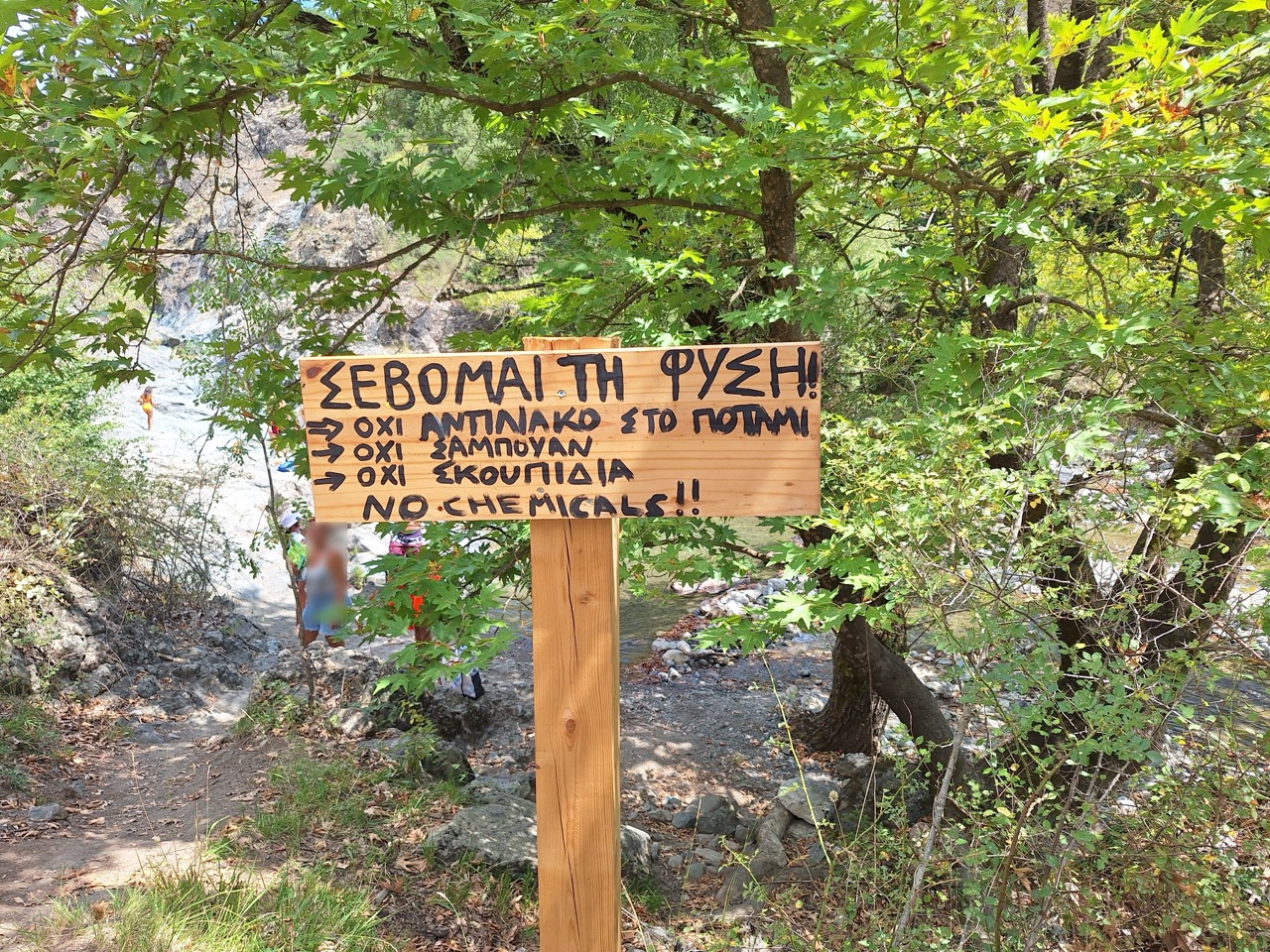
But what happens when the signs step past the limits of the logical, slip into the territory of the imagined, carry a dose of humour, and start telling stories?
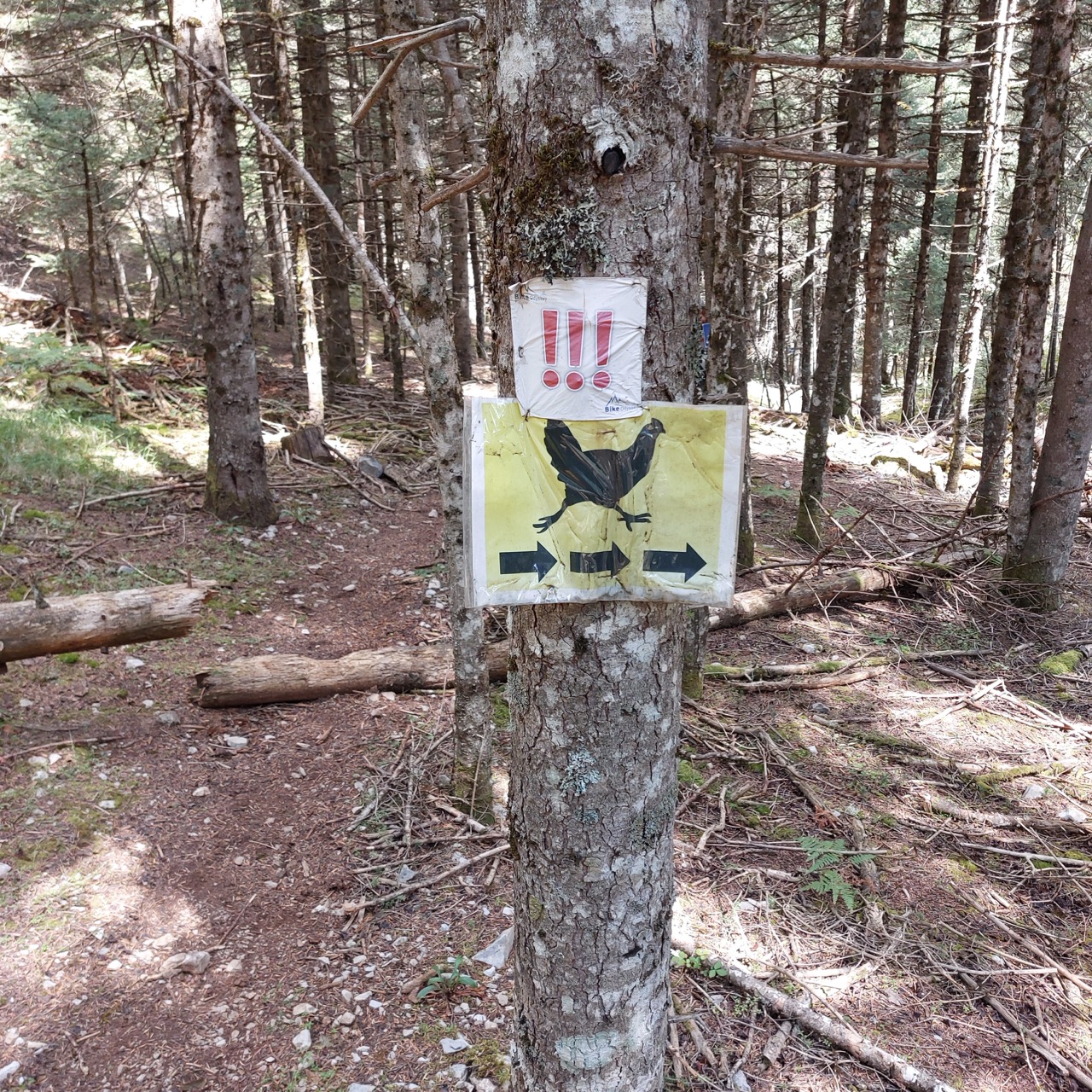
What we actually take home
We take photos of the big things on trips — the squares, the churches, the vistas. But it's the odd little hand-painted sign on a village lane, or the hiker's cairn balanced into a tiny tower, that ends up as the screenshot we send to a friend. The signs we remember aren't the official ones. They're the ones that stopped being signs and became tiny stories someone left behind for strangers.
What strange signs have you met on your travels?
Hand-painted warnings, poems carved into stone, jokes stencilled on a door. Tell Famila.Travel where you're going next — we'll help you find the roads where these signs still live.
🌍 Plan your trip freeNo account or credit card needed.