Two parks in northern Greece worth the detourA road trip through Naousa and Drama looking for shade, cold water, and old plane trees
On a summer road trip through northern Greece — right in the middle of a heatwave — we started looking for one thing: shade, ideally with a river running through it. We found two parks that delivered.
The forecast said 39°C in Thessaloniki. We were in the car anyway, heading east through Macedonia, and the only viable plan for a family with two kids was to keep chasing altitude and running water.
Two parks earned a permanent spot on our list — both easy to find, both crossed by rivers, both immaculately kept, and both fully accessible on flat paths. One tucked into the hillside just outside Naousa, the other right in the middle of Drama. Different feels, same trick: they use water to drop the temperature ten degrees the moment you step in.
The two parks at a glance
Alsos Agiou Nikolaou — 3 km southwest of Naousa. 60 hectares. Fed by the Arapitsa spring. Ancient plane trees. Cold enough that you'll want a light layer.
Agia Varvara Park — city centre of Drama, right where the springs of the Ydrama ("water city") burst out of the ground. Wooden bridges, clear pools, cafés, ducks and swans, and one very good annual candlelit boat parade in December.
• • •
Alsos Agiou Nikolaou — the plane-tree cathedral outside Naousa
Three kilometres southwest of Naousa, the road climbs briefly and drops you at a car park. From there you walk into what is essentially a forest built around a river. The Alsos ("grove") spreads over 60 hectares. What makes it come alive is the Arapitsa — one of the few rivers in Greece with a feminine grammatical name, so-called because of the dark tint of its water. Its springs are right here, inside the park itself, not somewhere upstream.
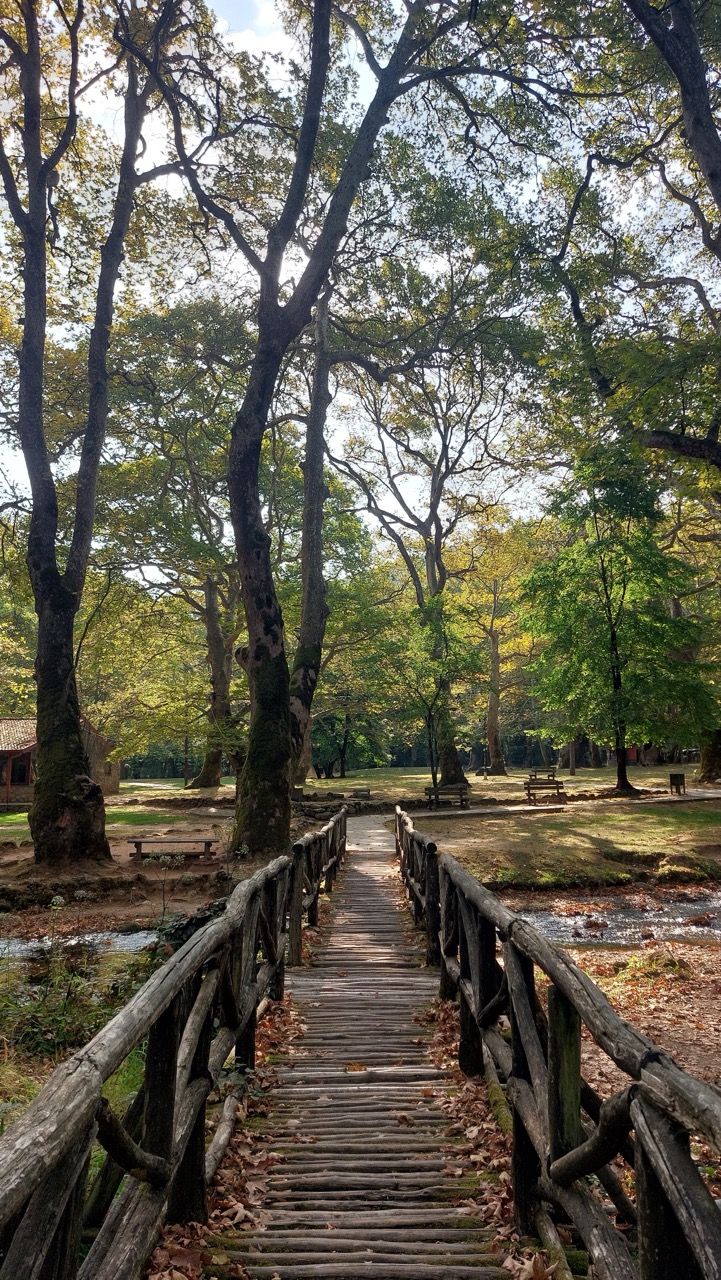
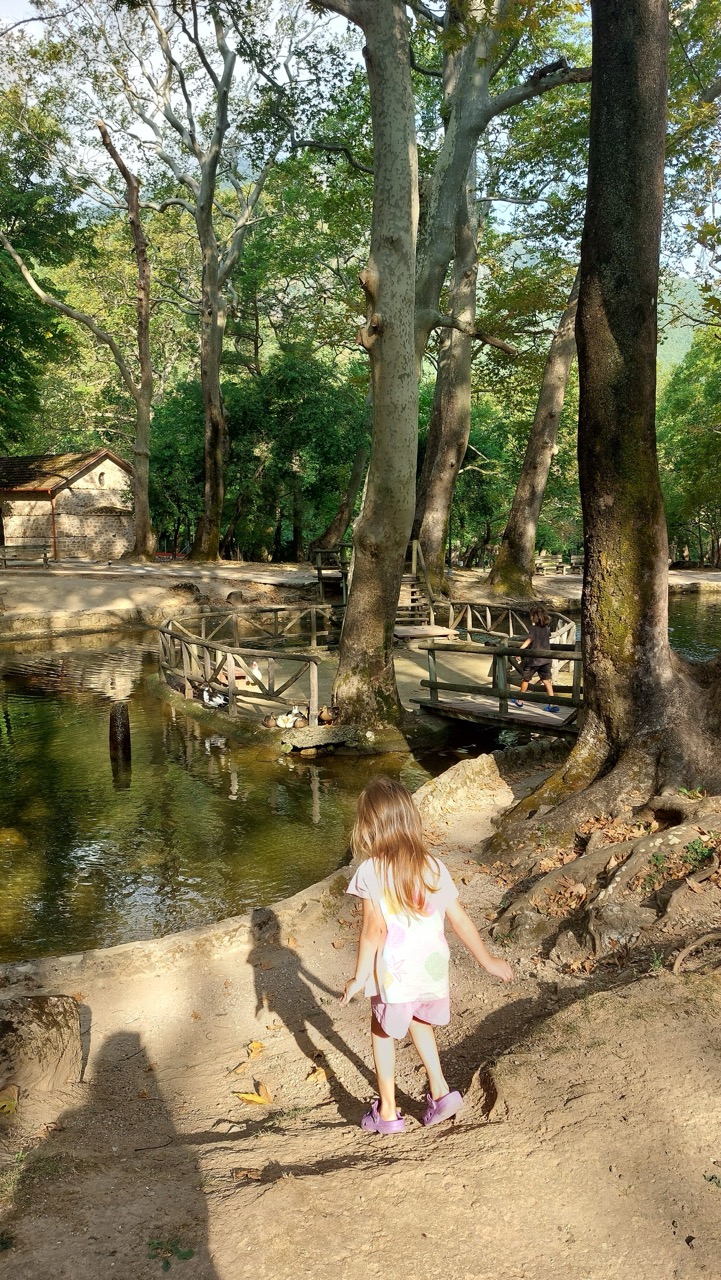
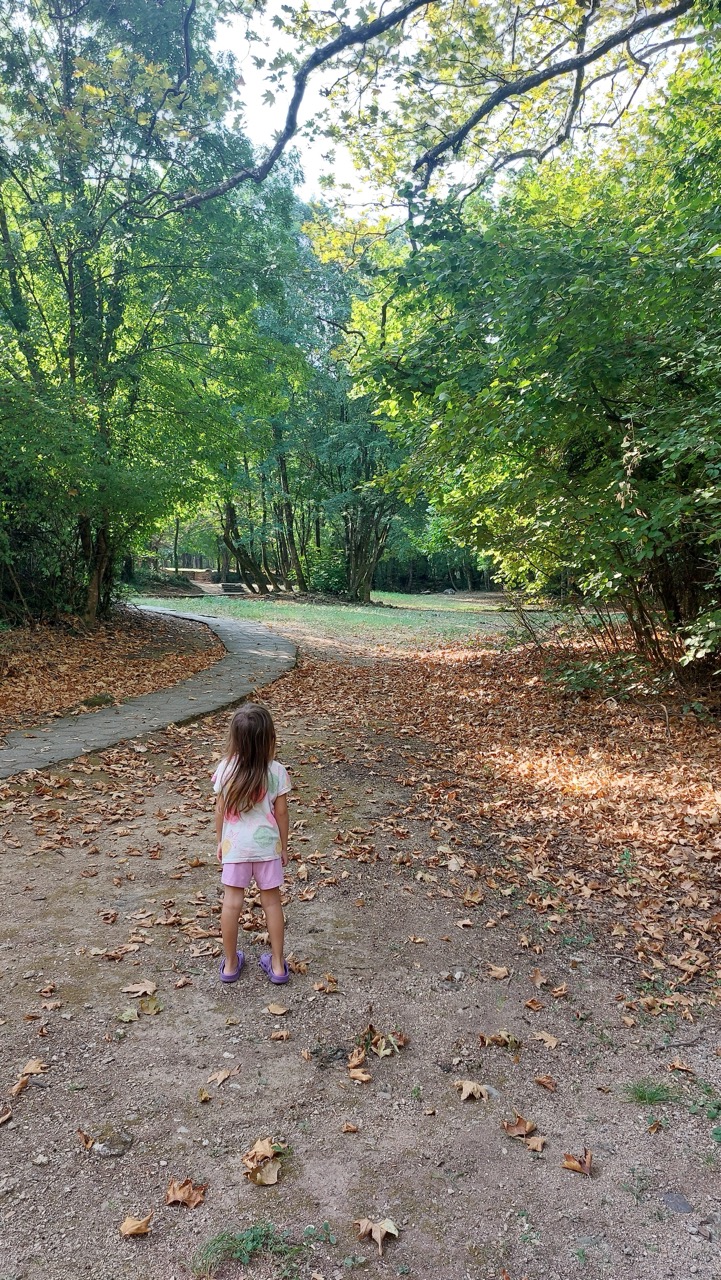
The centrepiece is the only surviving grove of centuries-old plane trees in Greece. Some of the trunks are wider than a picnic table. In summer the canopy blocks nearly all direct sun; the ground underneath is a natural lawn cut by small channels of running spring water, wild boxwood, linden, and oak.
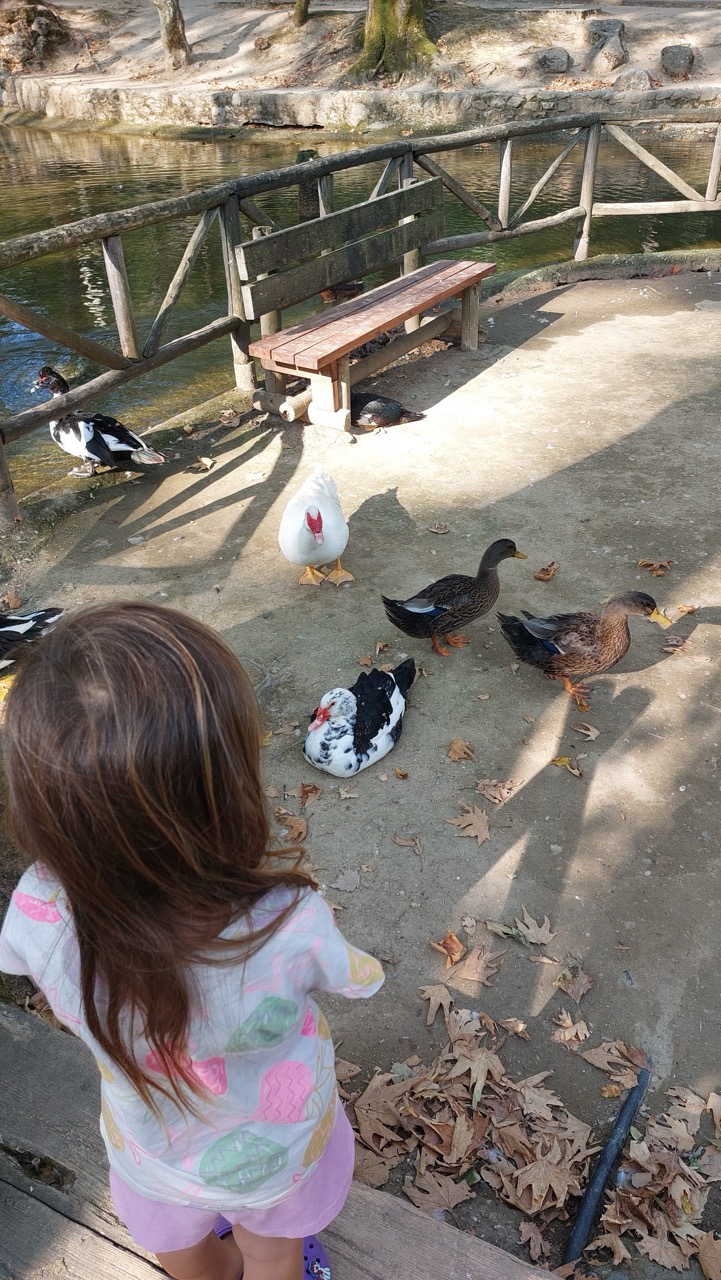
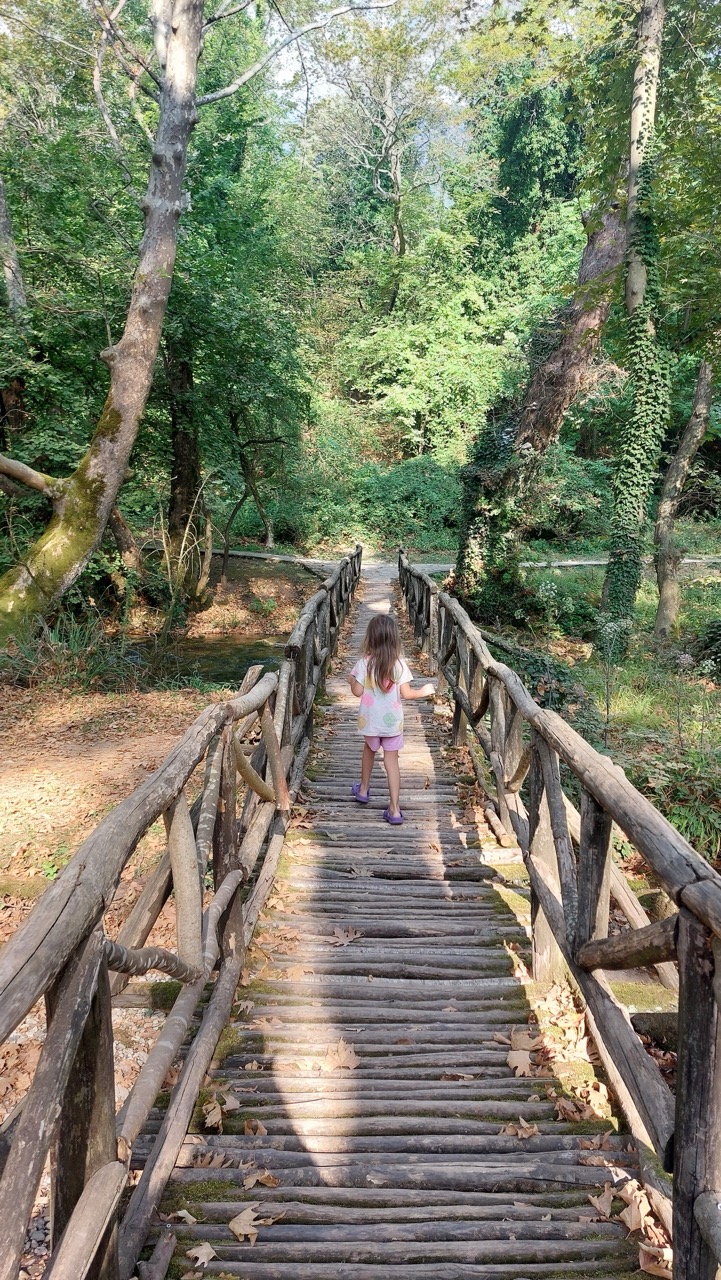
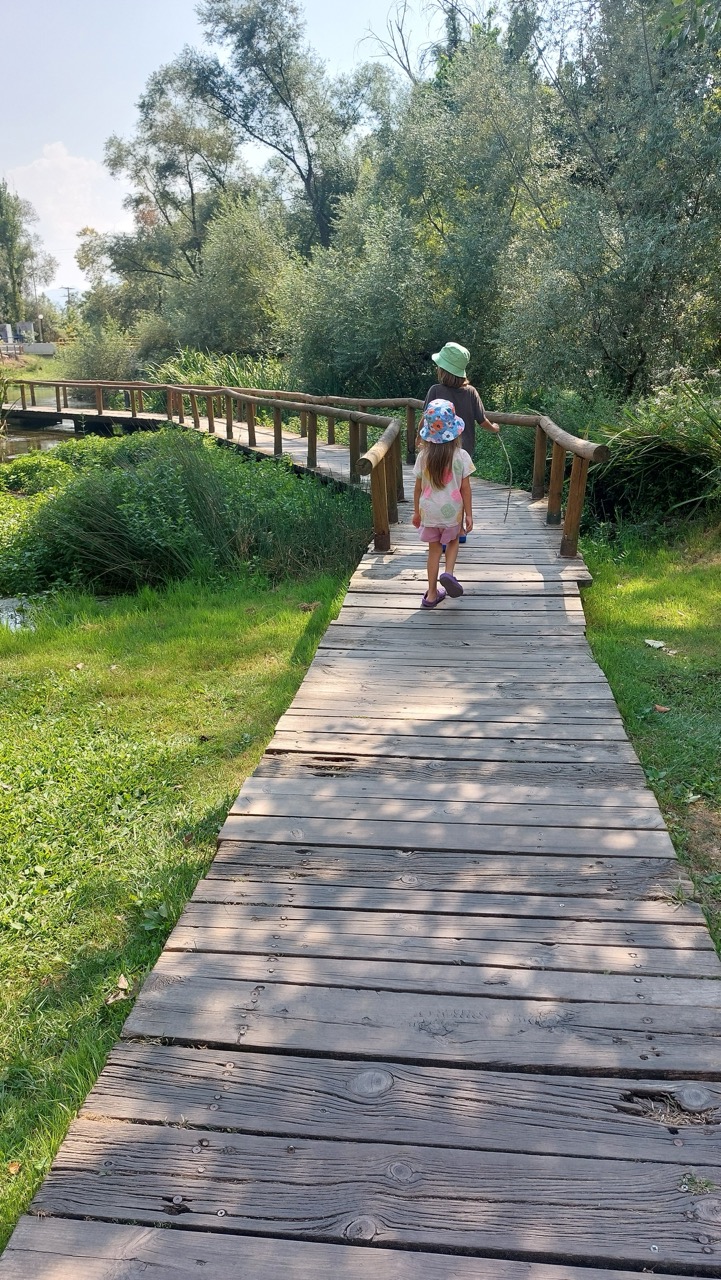
The paths are gentle enough for a three-year-old on foot. Wooden bridges cross the streams every few hundred metres. There's a duck pond near the entrance with mallards and one very confident Muscovy duck who owns the place.
The duck pond near the entrance. The white-and-red Muscovy at the front runs the place. The mallards seem fine with the arrangement.Path down to the second pond. The trunk on the right must be four hundred years old; the whole grove is like this.The long wooden bridge across the deeper end of the grove. This is the moment you notice the temperature has dropped ten degrees since the car park.One of the side paths, further in. Even in mid-summer the ground is carpeted in fallen leaves — the canopy is that dense.Same bridge, no crowd. Mid-week in August, morning, no traffic — highly recommend the early slot.
• • •
Agia Varvara Park — springs in the middle of Drama
Drama is built on water. So much water that one of the old names for the city was Ydrama — "water place". You feel it the moment you step into the Agia Varvara park: springs are bubbling up out of the ground everywhere, feeding a network of pools and small channels that snake through the middle of town.
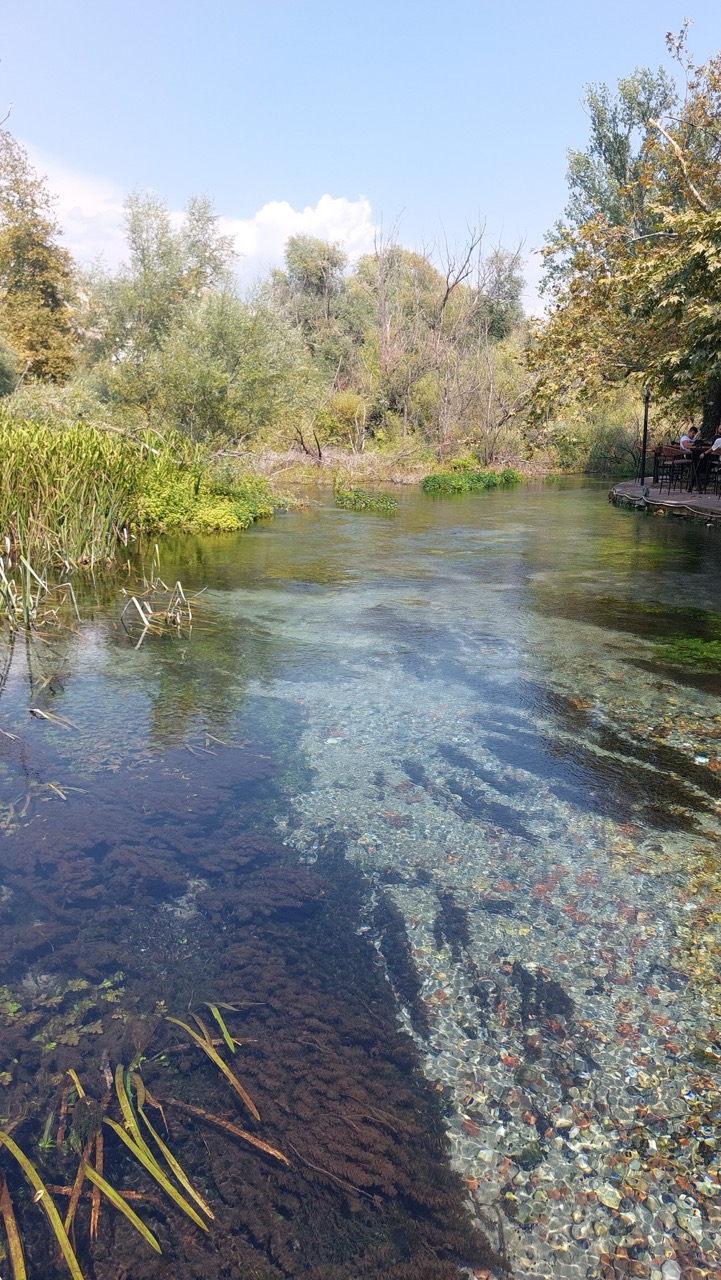
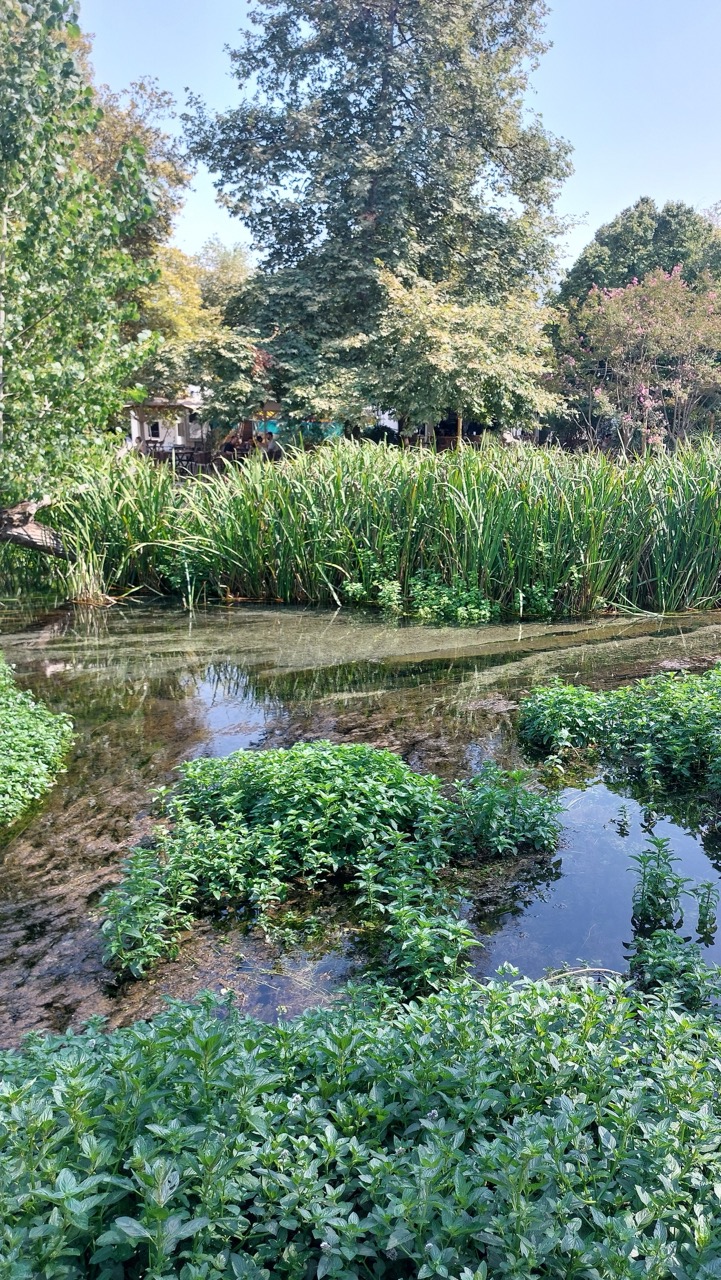
The park is around 60 hectares, right in the city centre. Under the plane trees, clear cold water pushes up between stones you can actually see through. Reeds, wild mint, and small floating plants form little islands. There are fish. There are dragonflies. There are swans and geese and enough ducks to keep small children occupied for hours.
Around the edges the town wraps in politely: the historic Spirer tobacco warehouse is now a boutique hotel; there's an open-air amphitheatre that hosts the Drama International Short Film Festival every September, plus photography exhibitions and outdoor concerts; the church of Agia Varvara gives the park its name; and there's a ring of cafés and tavernas where you can sit with a coffee and watch the ducks re-negotiate territory.
For kids, this is the good stuff: stone paths, wooden bridges, little viewing platforms over the pools where you can lean over and count fish, and enough wildlife to keep them still and looking, which is not something a park always achieves.
One thing to plan for — 4 December
On the eve of Saint Barbara's feast day (4 December), dozens of small boats with lit candles are set to float on the park's central lake — the townspeople line the banks. It's genuinely one of the most atmospheric evenings in northern Greece, and it's free. Worth arranging a trip around if you can.
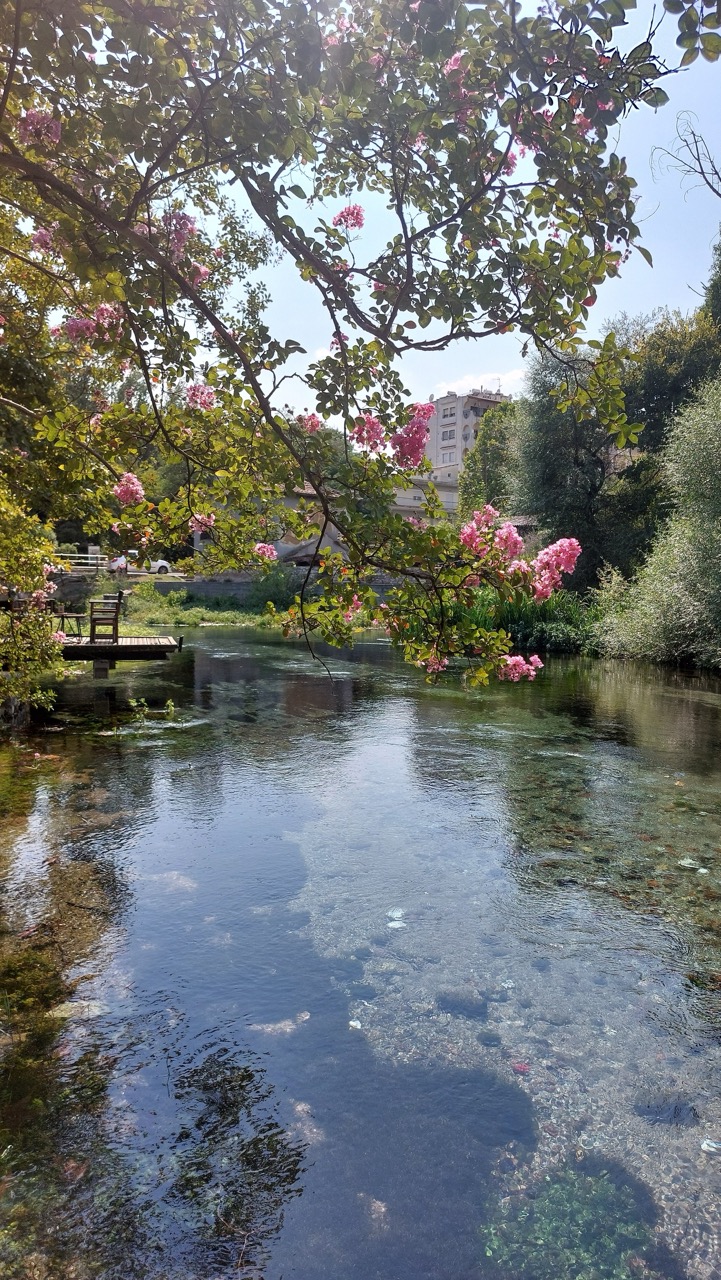
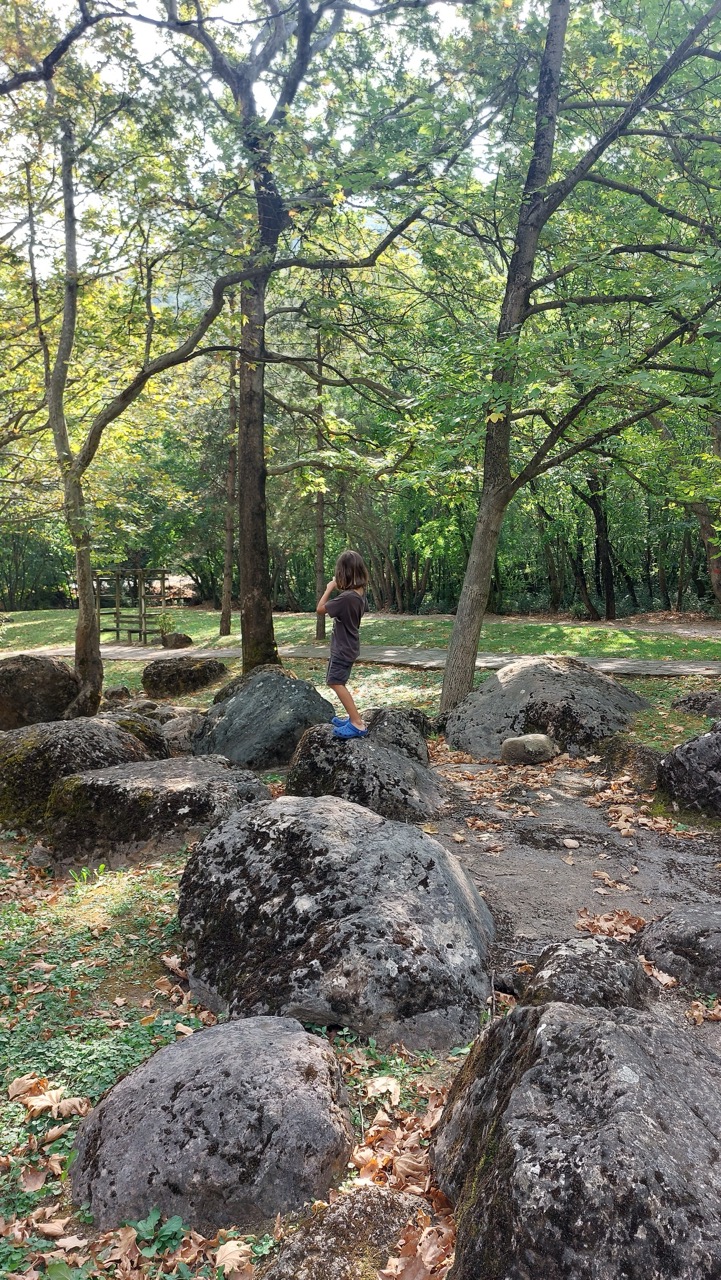
The main spring at Agia Varvara. The water is so clear you can count individual pebbles four feet down. Café on the right — people have been sitting in that spot since about 1930.The boardwalk that runs alongside the eastern channel. Two-year-old-approved.The wild-mint pools on the far side. Snap a leaf, rub it between your fingers — the whole park smells like this on a warm afternoon.Where the park meets the town. Crape myrtle in the foreground, one of Drama's residential blocks in the back — the city really does start at the water's edge here.The boulder garden at the north end of the park. Not on any map. Kids find it in about ninety seconds and lose about an hour there.
• • •
If you're driving through northern Greece in summer
Route them both into the same day if you can — they're about an hour and a half apart by car, and the roads between are easy. Bring the kids' water shoes for Drama (they will end up in a channel), and a light layer for Naousa (the shade under those plane trees really is that cold). Both parks are free, both have parking, both have cafés at the edges, and both are the kind of place a local family goes on a normal Sunday, which is usually the best signal a place gets.
We came for shade. We left with a shortlist for next summer.
Tell Famila.Travel your dates and your kids' ages — it'll route you between places like these two parks, with day-by-day stops your family will actually enjoy.