Five days in Naples — and the trip that taught us a few thingsPompeii in bloom, a hilltop village pizza we'd fly back for, an Amalfi drive in the rain, and the oysters we should never have ordered
A short, nearby destination can turn into the biggest (negative) adventure of your life — and still leave you with four or five things you'd happily do again. Here's what Naples with two small kids actually looked like.
📖 7 min read🗓️ Spring 2026📍 Naples, Pompeii, Caiazzo & the Amalfi Coast
Often, things don't go the way we planned.
A trip to Naples. Close by, small city, Mediterranean feel, spring weather. We didn't overthink it: we booked the flights, did a bit of light prep, and set off for five days — the plan being to base ourselves in Naples, rent a car, and do day trips out from there. On paper, one of the easier family breaks we'd done. In practice, almost nothing went to the plan — and we came home with a punch list of things we'll never do again, and a short list of places we'd return to tomorrow.
What we chased: history, pizza, coastal views, and (so we thought) good seafood
• • •
Arrival — a crash course in Neapolitan driving
We landed late, a little before midnight, and took a van taxi from the airport. Our eyes were half-closed; the kids were asleep on the back seat. Then the driver pulled out onto the ring road, and the trip began.
The driving — the sudden braking, the horn used as a greeting, the way three lanes become five when nobody is looking — snapped us awake and reminded us, forcefully, that we were in the Italian south. If you've never driven in Naples, no amount of warning quite prepares you. It is theatrical, loud, and governed by a set of rules no one has written down and everyone seems to know. By the time we reached the hotel I had already started quietly editing the "rent a car and drive to the coast" plan in my head.
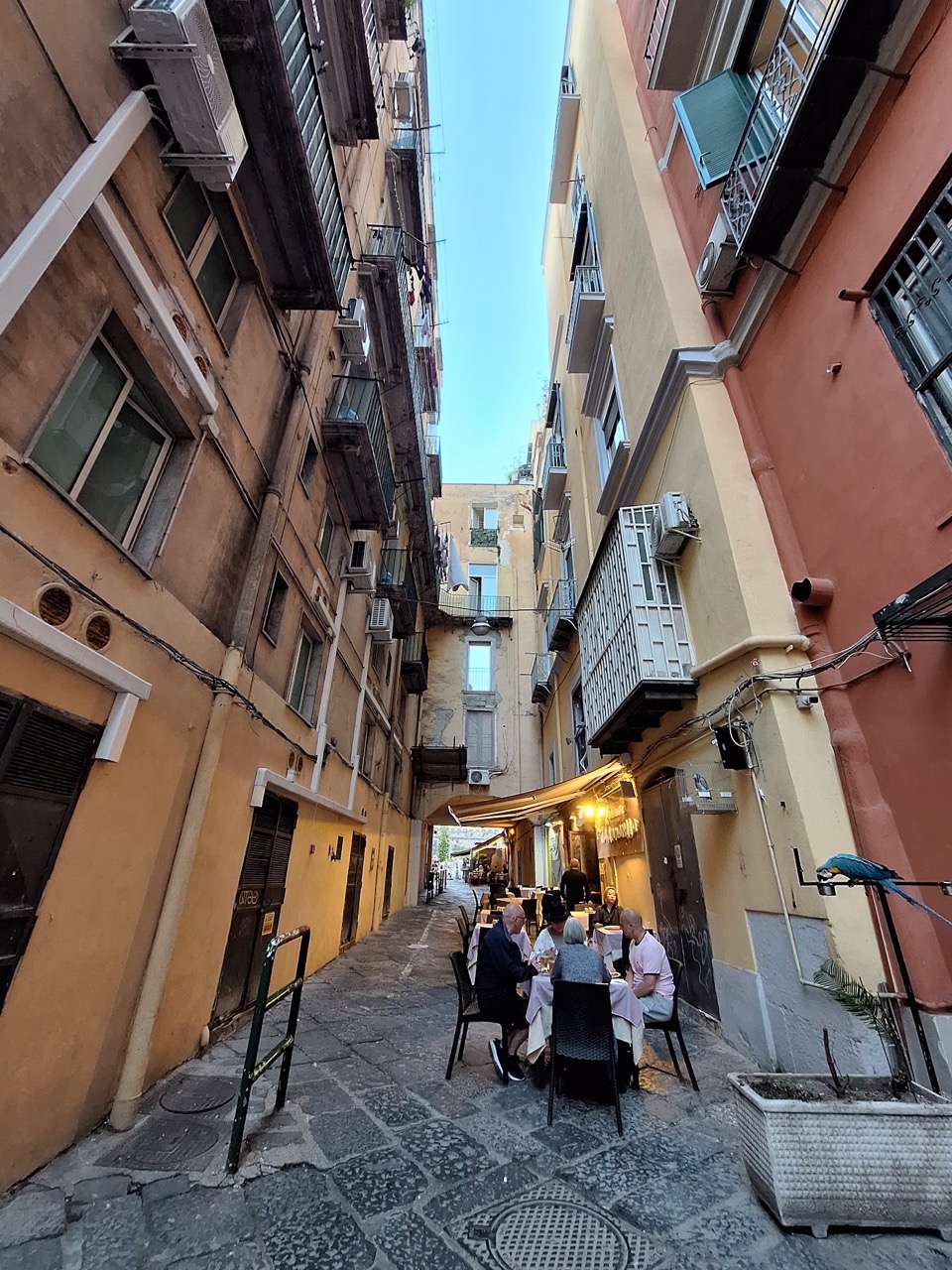
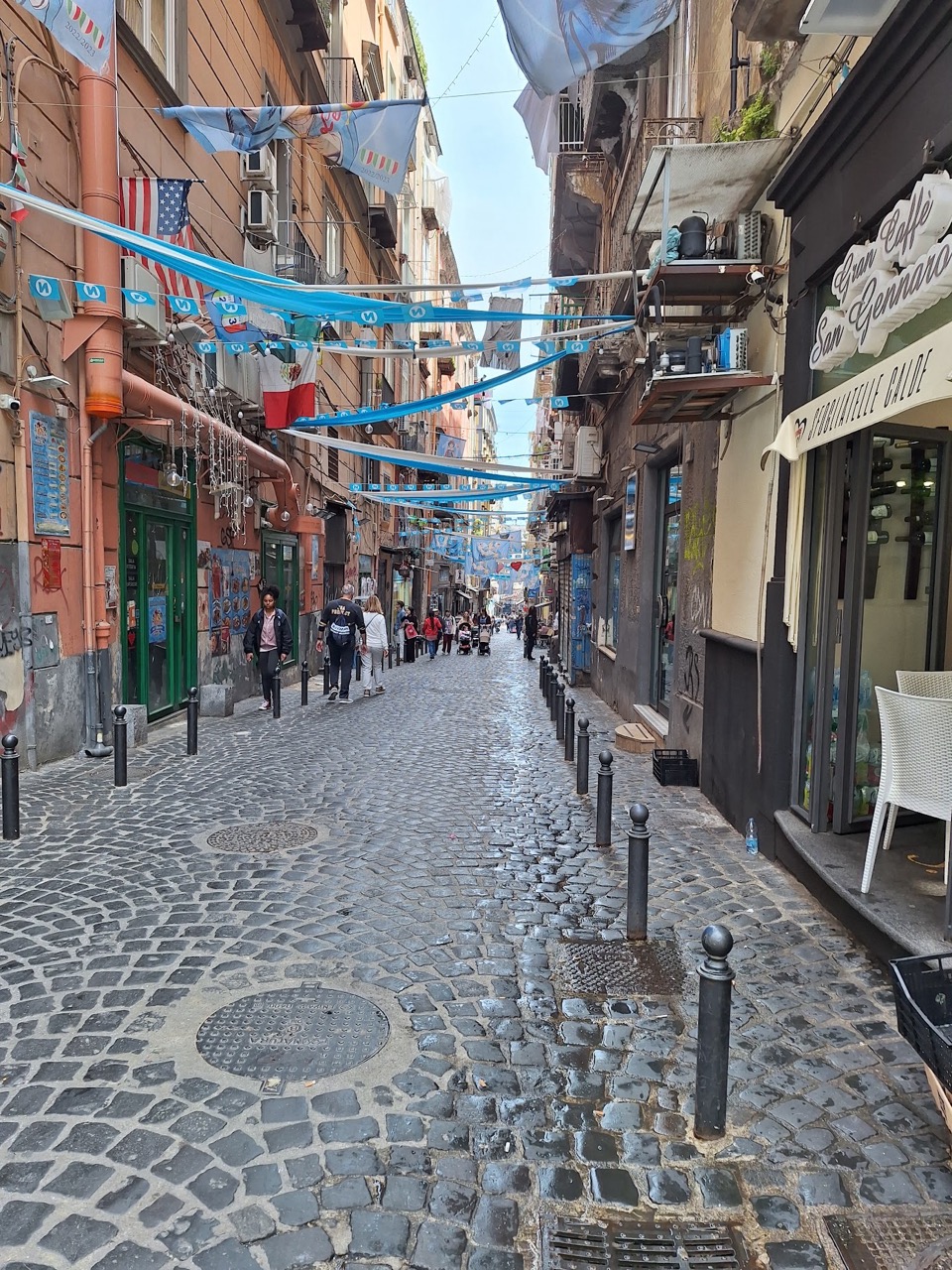
Central Naples the morning after. Even the quietest side streets had a scooter weaving through at speed — the city doesn't take its foot off the pedal for long.
• • •
A day in the city — castles, fountains, and the sea
The next morning we walked. A lot. And slowly, the city began to show us what it was.
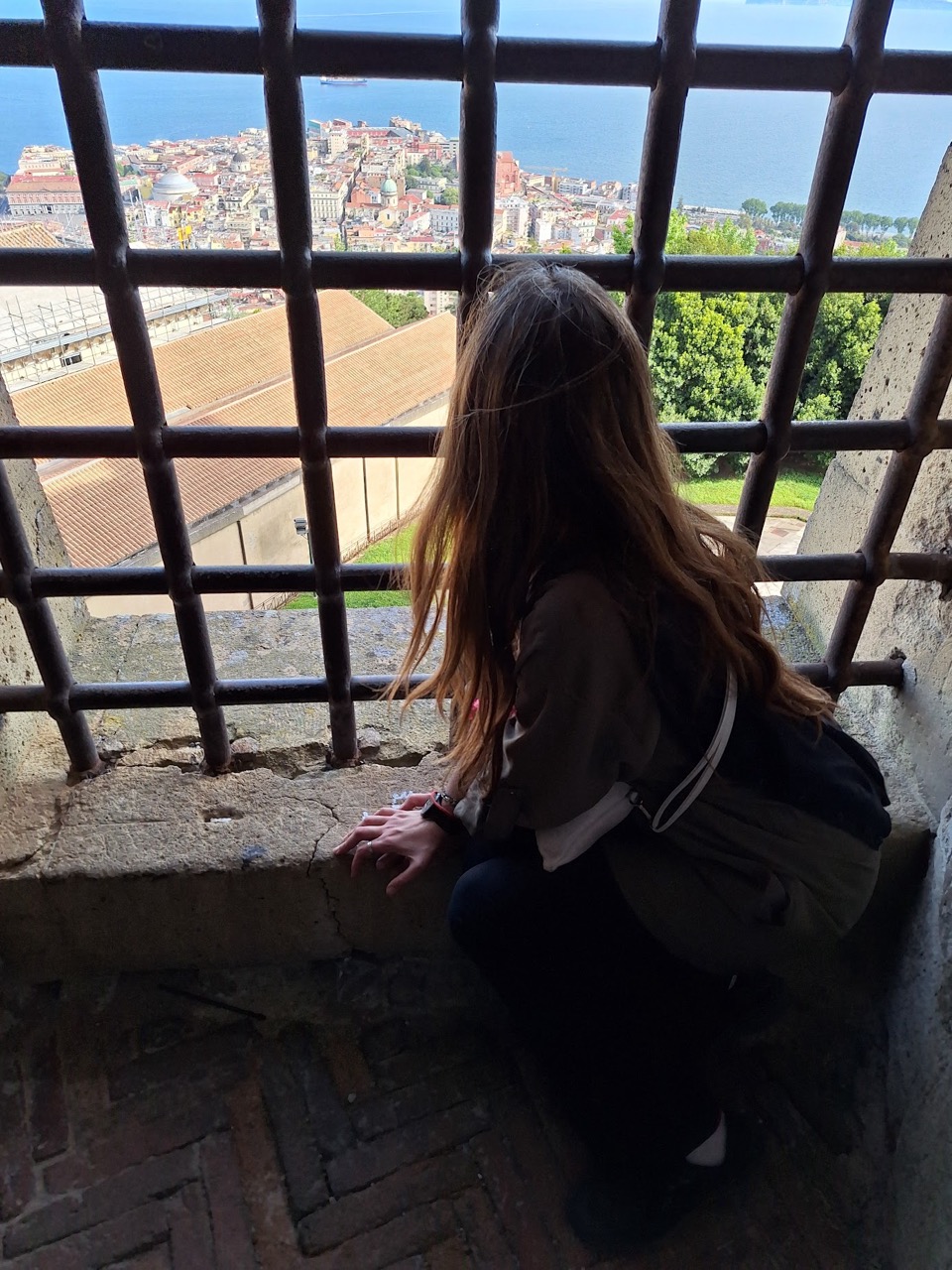
We climbed up to Castel Sant'Elmo for the view — the whole bay opens up below you, Vesuvius sits across the water like a stage prop, and the kids were old enough to understand that that is the mountain that buried the city we were about to visit the next day. Then down into the centre, past the brooding bulk of Castel Nuovo, along the waterfront to the Fontana del Gigante, and out to Castel dell'Ovo on its little island. A loop any family could do in half a day. Pizza slices along the way. Gelato as a reward system.
Naples does not sell itself to you politely. It's loud, chaotic, graffitied, beautiful, and uninterested in whether you approve. The kids, oddly, loved it from the first hour.
Castel Sant'Elmo from the uphill approach. The view from the ramparts is the one most people remember from Naples — the whole bay in one frame.Castel dell'Ovo at the end of the harbour walk. An easy loop on foot from the Fontana del Gigante — flat, kid-friendly, and ends with gelato by the sea.
• • •
Strike one: the car rental
On day three we went to collect the rental car we'd pre-paid, with child seats, weeks in advance. We arrived at the desk; the car came without seats. The agent shrugged and offered to sell us "insurance" instead, at an extra charge that wasn't in the original quote.
It was day three. We didn't let it ruin the morning. But file this under the lessons at the end: in Naples, treat a pre-paid car-rental booking as a starting position for negotiation, not a confirmed contract. Bring your own seats if you can. Read the small print on insurance before you sign anything. And budget an extra hour at the counter.
• • •
Pompeii — the trip's high point
And then Pompeii. Which was everything we'd hoped for and more.
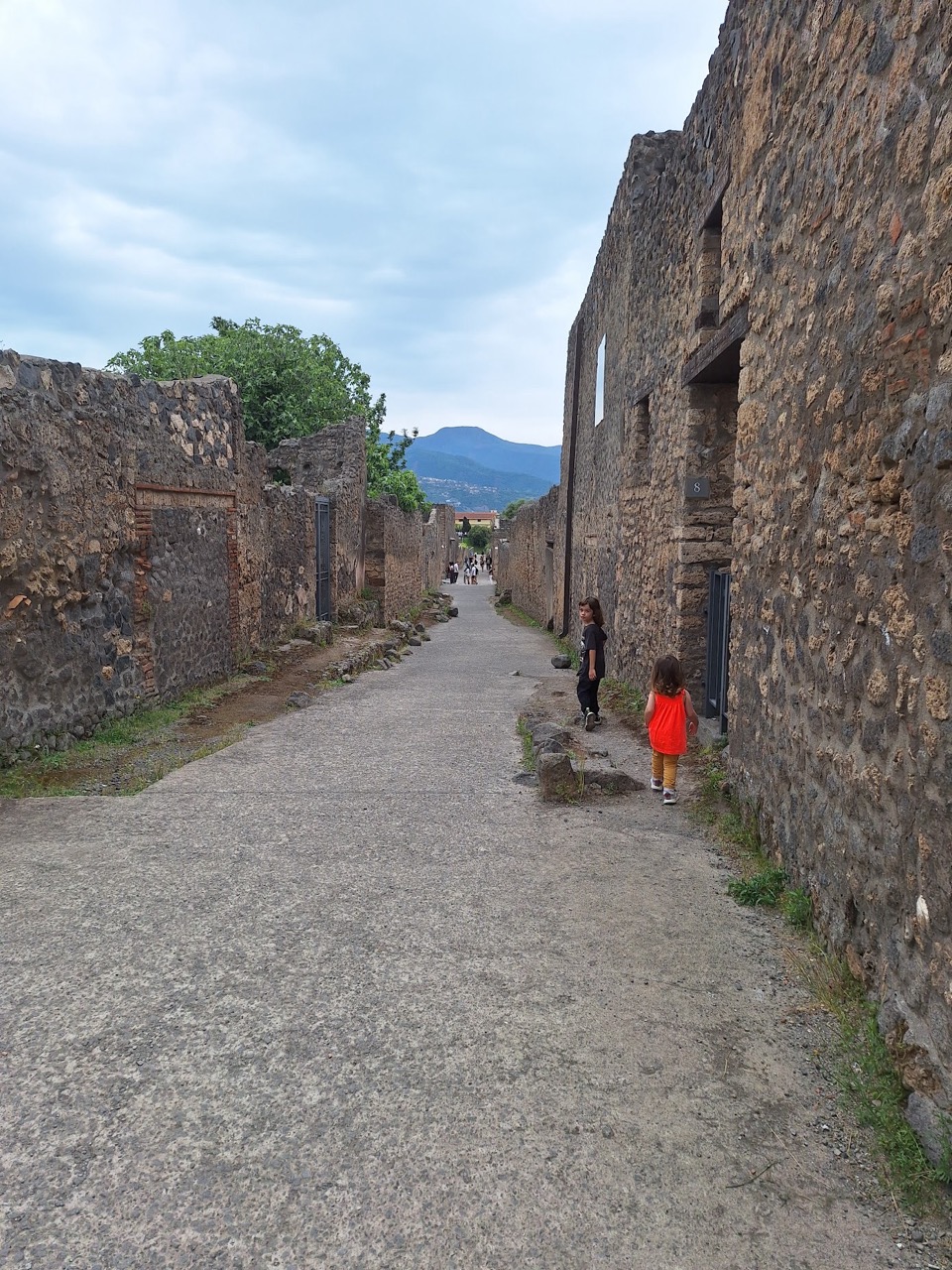
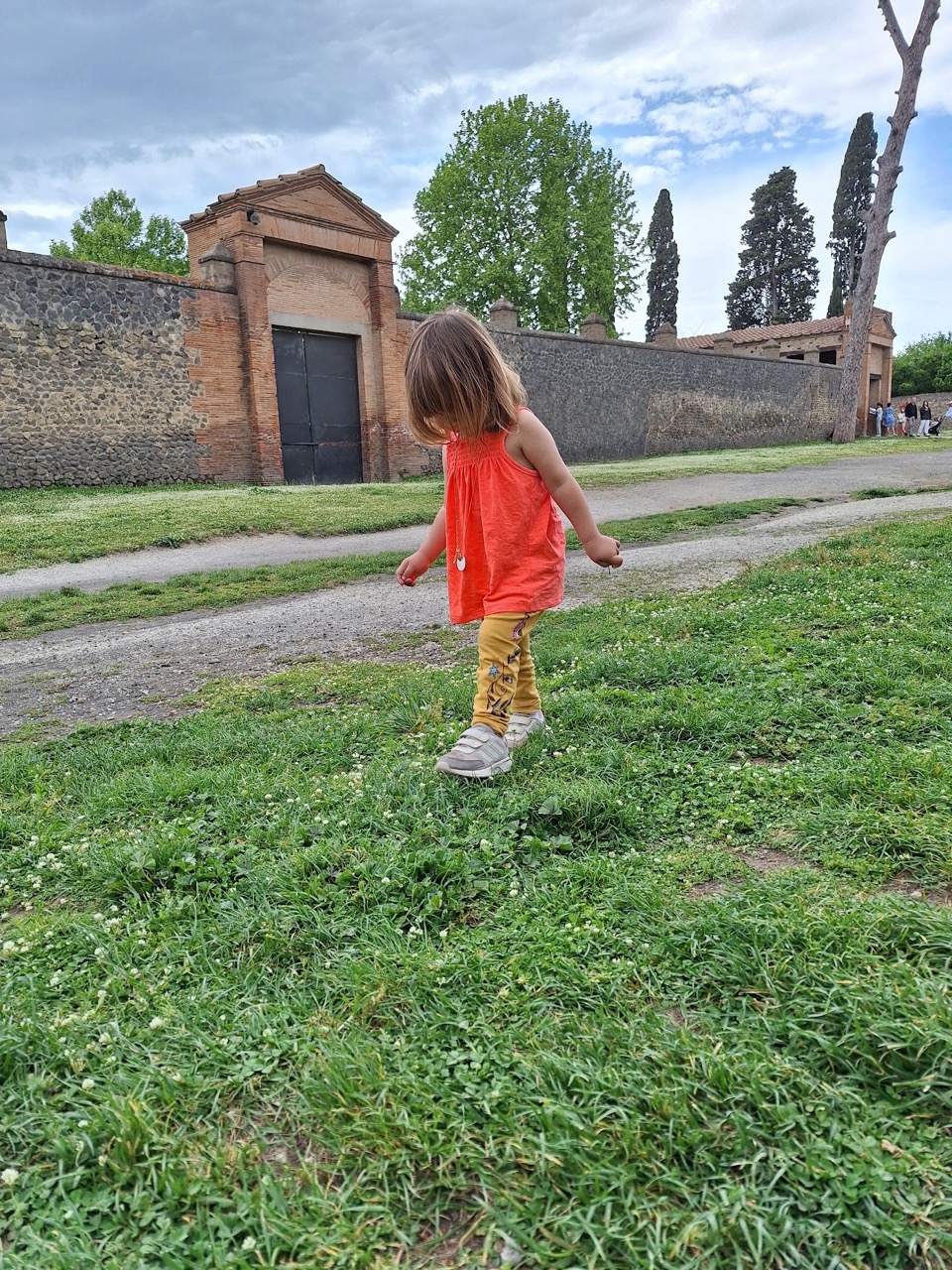
Walking down a stone-paved street with ruts worn by cart wheels two thousand years ago, under the sun, with red poppies in bloom pushing up between the old walls — it's one of those places that genuinely lives up to the thing you've been told about it since school. The poppies are what I remember most. Blood-bright, waist-high, spilling over Roman stone, lighting up the dark corners of the city's history. The kids were quiet in a way they usually aren't; they understood that something important had happened here.
This is a place I'd come back to. Again and again. We booked our tickets online weeks in advance — do this — and even then the queues at the gate were long. One mistake we did make: we didn't book Mount Vesuvius early enough. By the time we tried, tickets for the summit path were sold out for every day of our trip. Lesson filed.
A main cardo in Pompeii in late spring. The poppies grow in the thinnest strips of soil along the roadside — the only bright colour in a city of grey stone.The scale is kid-sized in all the right ways — rooms you can walk through, courtyards you can run across, and enough shade in the villas to escape the midday sun.
• • •
Caiazzo — the hilltop village and the pizzeria we'd fly back for
Day four we drove north — a long loop around Vesuvius with the aim of reaching Caiazzo, a small town built on a hilltop in the countryside north of Naples. It was my favourite day of the trip, and I didn't know it would be when we set out.
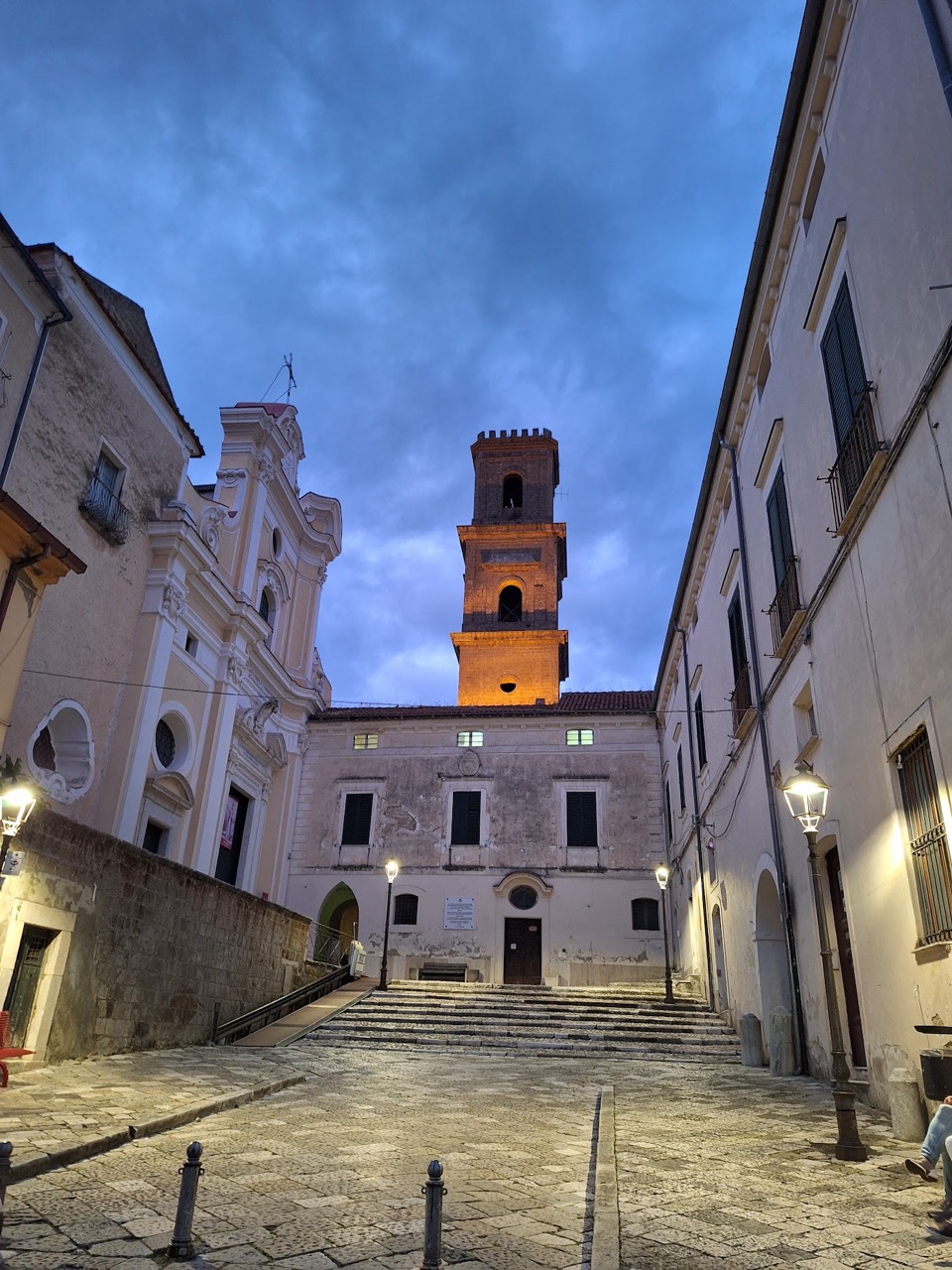
We parked below the old town and walked up. Caiazzo is quiet. Narrow streets, warm stone, almost no tourists. We looked around the Co-cathedral of Saint Mary of the Assumption and Saint Stefano Menecillo — small, intimate, light-filled — and then went looking for lunch.
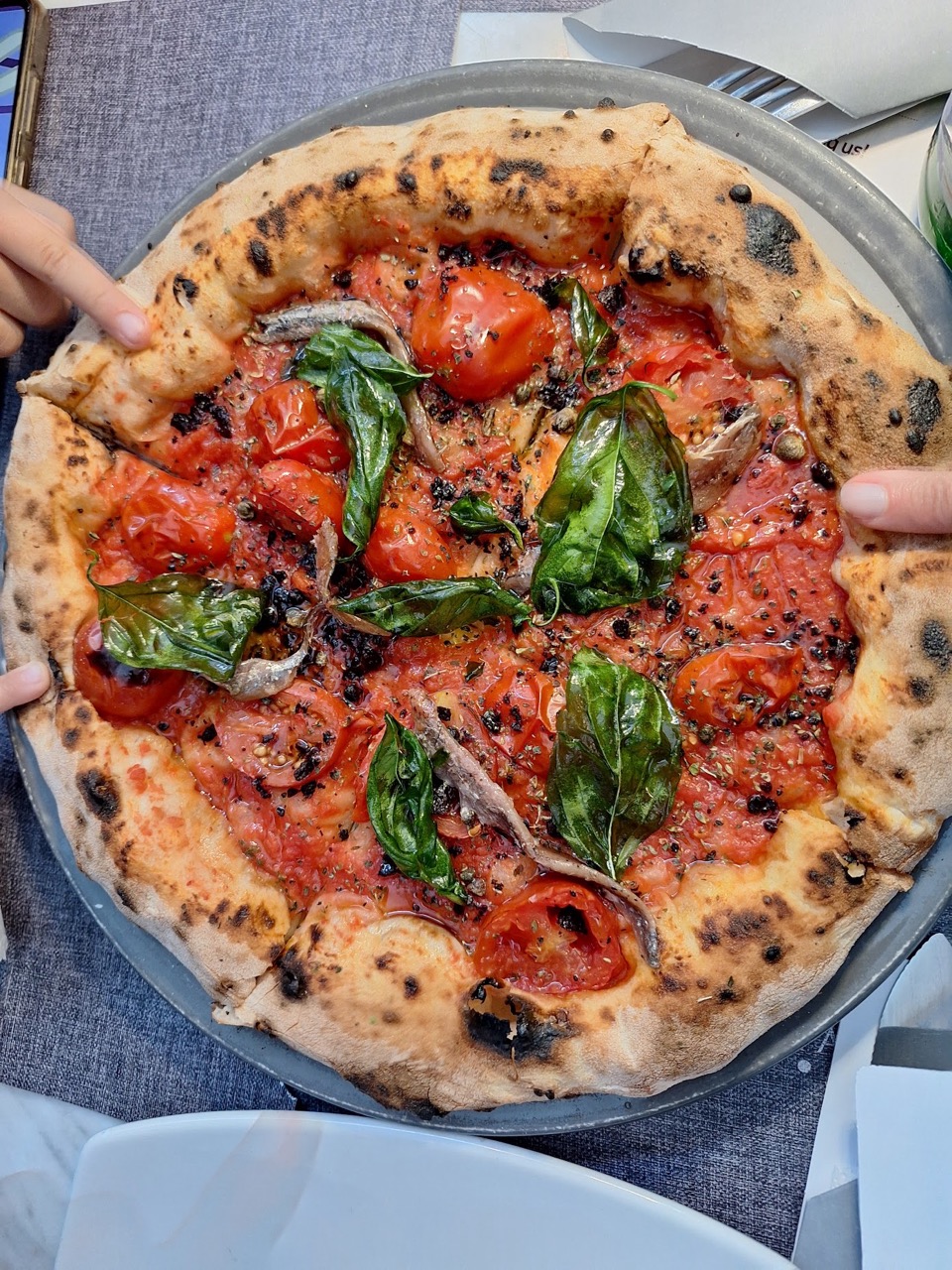
What we found was one of the best meals of the entire trip. A pizzeria in the old town that absolutely did not need to try that hard — slow service in the best way, a short menu, a tomato-and-mozzarella pizza that tasted like someone had cared about every single ingredient. If this essay has a single actionable recommendation, it's this: get out of central Naples to eat. Drive thirty minutes into the hills, pick a village that doesn't appear in guidebooks, and sit down somewhere small.
I would fly back to Caiazzo tomorrow.
Caiazzo old town. Quiet in a way the Amalfi villages no longer manage to be — and under thirty minutes from the pizzeria that made the whole trip worth it.The co-cathedral in the main square. Not grand — but after Pompeii and before the Amalfi driving, the quiet inside was exactly what we needed.
• • •
The Amalfi Coast — the day everything turned
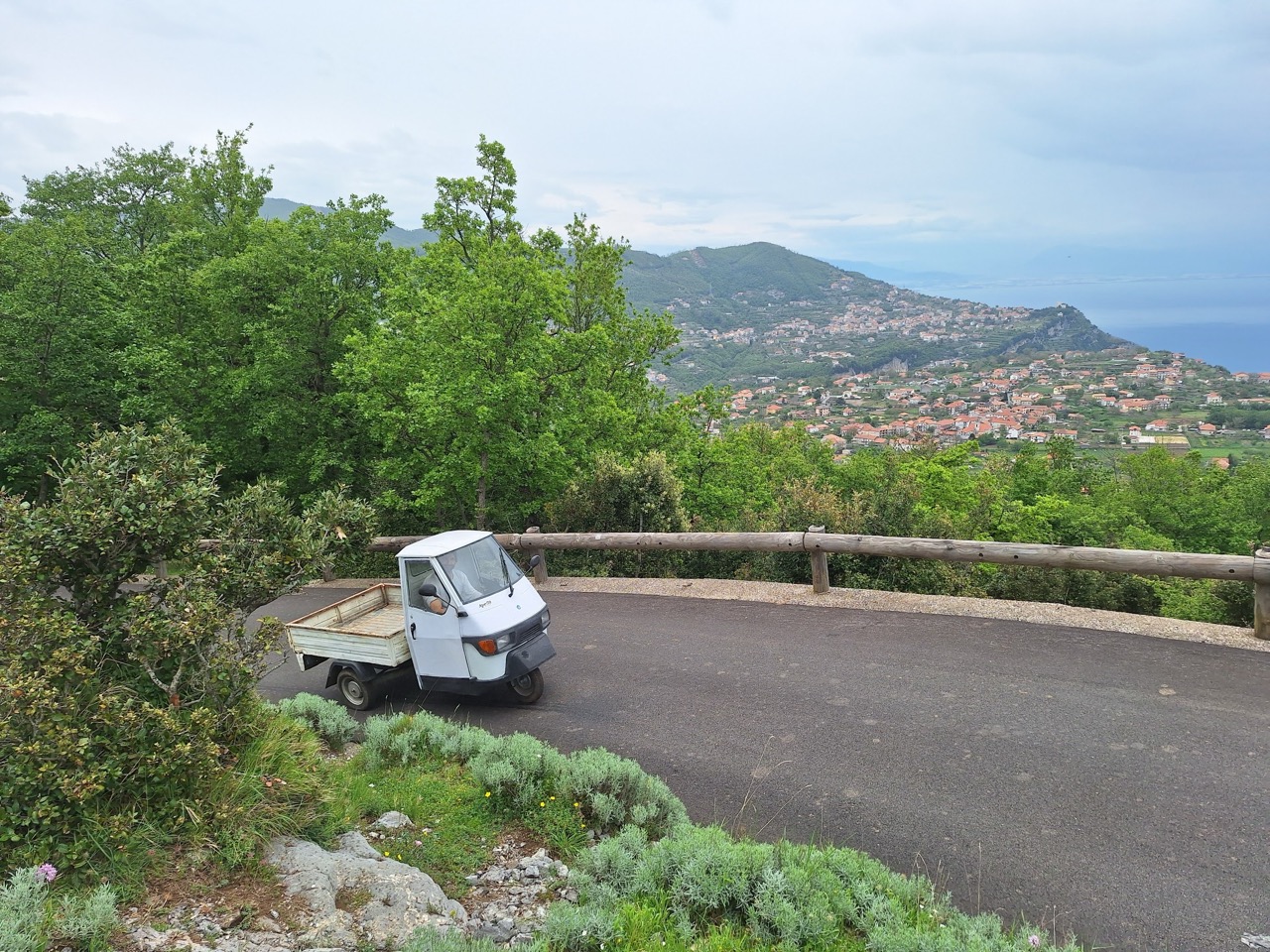
The fifth day was supposed to be the headline. South-east out of Naples, through the Monte Cerreto range on a quiet green road, then down into Ravello and along the coast through Amalfi, Positano, and Sorrento. On paper, a dream day.
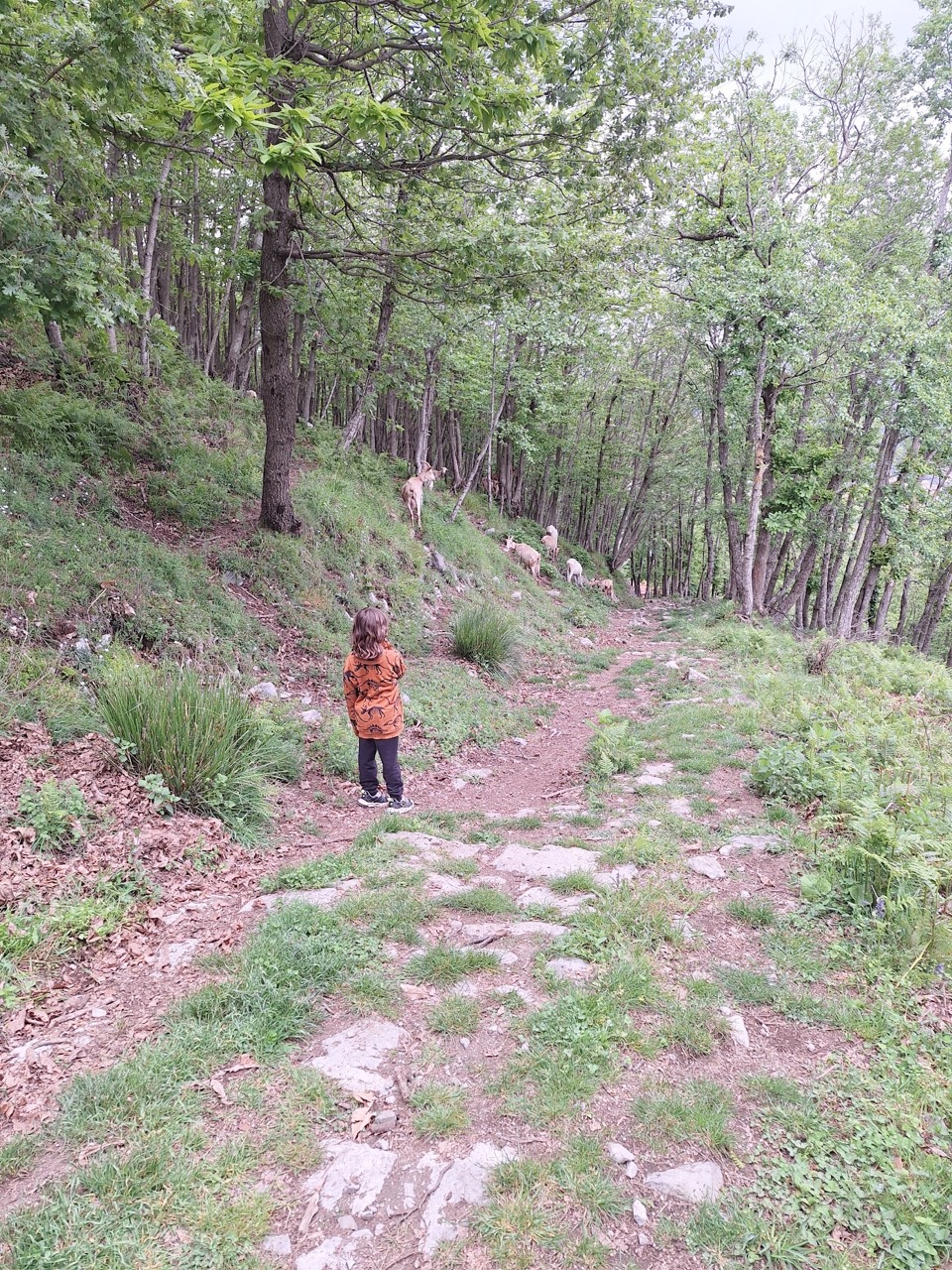
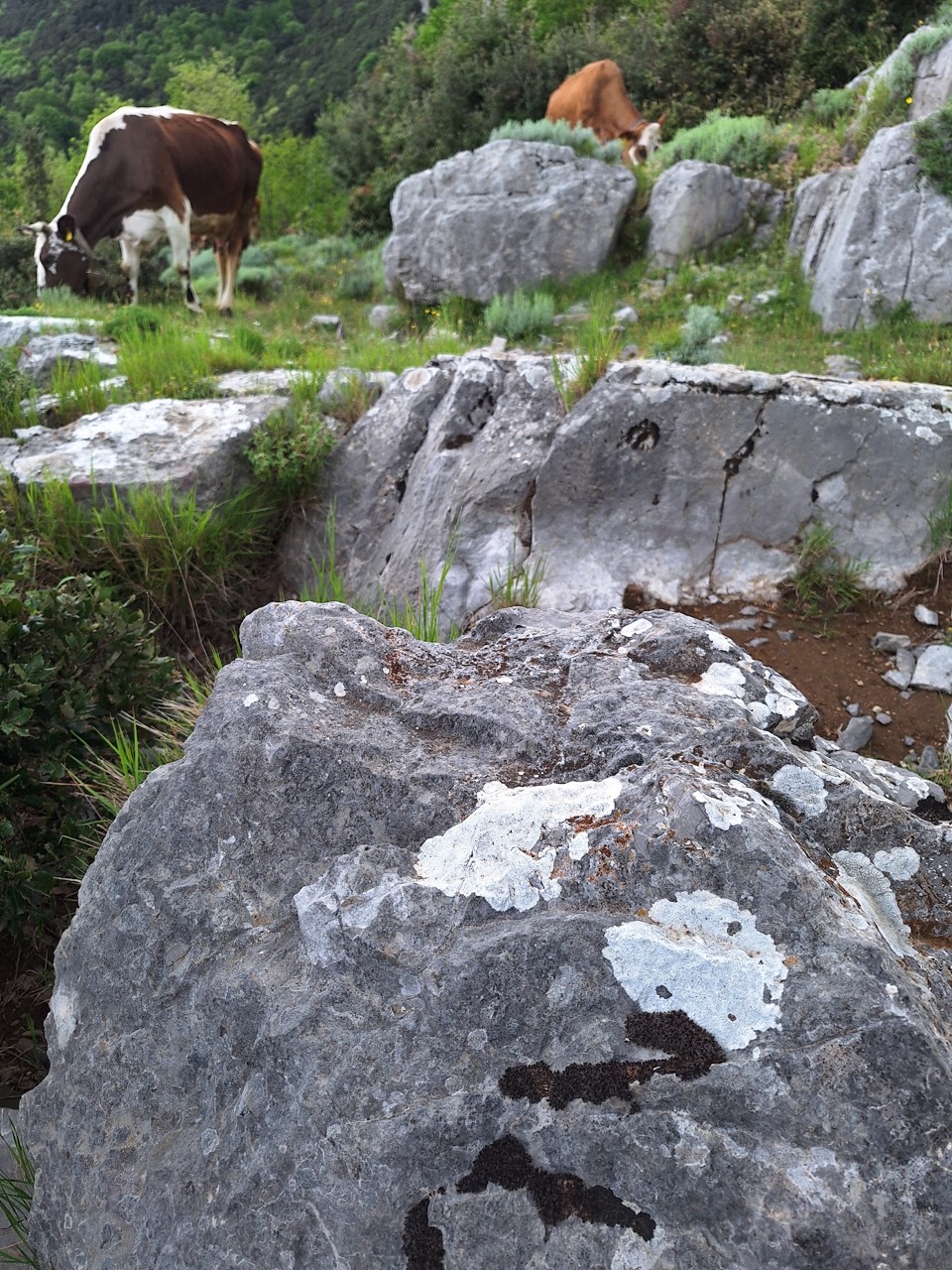
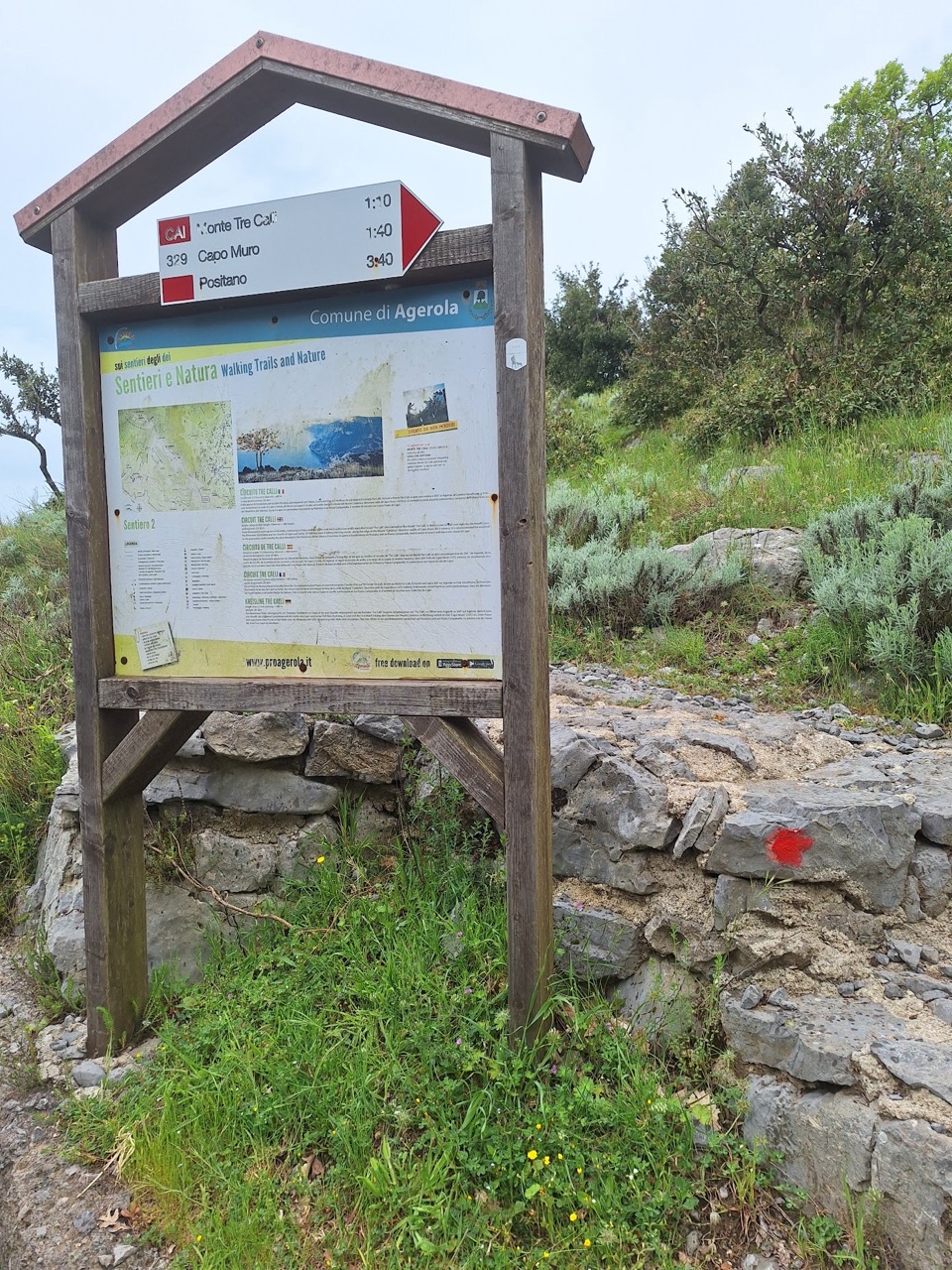
The first part worked exactly as planned. Monte Cerreto was beautiful — a gentle cloudy morning, cool air, a short walk off the road down a Mediterranean trail with the sea opening up far below from the sheer cliffsides. The kind of ten-minute detour that stays with you.
Then Ravello, which looked exactly like Ravello is supposed to look: lemon groves and small vineyards clinging to steep slopes above the sea, narrow lanes, cafés spilling out onto tiny squares. Touristy for our taste, but undeniably photogenic in a way that made us wish we'd planned to spend the night there instead of making it a stop.
And then the rain. And then the driving.
Dropping from Ravello down the switchbacks to Amalfi, the sky opened and the already-ridiculous local driving turned genuinely dangerous. Hairpin turns, blind bends, tour buses coming the other way at speeds that didn't match the width of the road. Without child seats, the kids were rolling across the back seat like melons. The van and coach drivers were, frankly, unacceptable. It felt like a video game with a few lives left.
From Amalfi we tried to make Positano. It was raining too hard to stop anywhere. We arrived in Sorrento soaked, nerves shot, and decided we'd eat early and head back to Naples.
Monte Cerreto on the drive out. Ten minutes off the road and the sea opens up below you from the cliff edge — the quietest, most beautiful stop of the day.Ravello from the terraces. Lemons, vineyards, a long drop to the sea. We should have booked a night here instead of trying to see three villages in one day.The coast road between Amalfi and Positano in heavy rain. The driving here is theatrical in the best weather — in a downpour, with no child seats in the back, it was something closer to a stress test.
• • •
Strike two: the restaurant in Sorrento
In Sorrento we found a restaurant that was, by every surface sign, fine. Fairly new. Good reviews online. Nicely decorated interior, music, a wine list that suggested someone cared. We ordered gnocchi, a few plates to share, and — fatally — a selection of seafood: mussels and oysters.
The food came, we ate, we paid, we drove back to Naples. The kids slept. Everything felt, briefly, like it was recovering.
That night in Naples was the worst of the trip. Three of the four of us who'd eaten the seafood came down with serious food poisoning within hours of each other. The next morning we had a flight to catch. We dragged ourselves to the airport in a state the airline staff could see from across the gate. We landed in Athens barely functioning; the effects followed us home, and one of us ended up at the hospital.
We called the restaurant to tell them, not for a refund, but on the off chance that the next family wouldn't have the same night. They were polite. I hope they looked at their supplier the next day.
• • •
What we'd do differently
A destination this geographically close, and this culturally familiar, can still turn into the biggest (negative) adventure of your life and leave you with a long list of surprises. Here's what we took home.
Lessons from five days in Naples
Book Vesuvius weeks in advance. The summit-path tickets go fast, especially in spring and summer. If Vesuvius is on your list, book it before you book the flights.
Never eat raw shellfish out, anywhere. This is a rule we now hold absolutely. One meal cost us three sick people and most of a week.
Give Ravello more time. A night there would have been better than a stop. Don't try to see Ravello, Amalfi, Positano and Sorrento in one day — the coast is too dramatic and the roads are too slow.
Treat Neapolitan driving as a life experience. It is, and once you've done it you'll understand why Italian driving jokes exist. Just know what you're signing up for, especially with young kids in the back.
Eat outside the city centre. The best meal of our trip was in a village of 5,000 people, in a pizzeria nobody told us about. Rent the car for the food, not just the ruins.
Don't fully trust the car rental. Pre-paid child seats may not appear. Bring your own if you can. Read the fine print on the insurance before you sign.
Tell Famila.Travel your dates and your kids' ages — it'll build an itinerary that gets the Vesuvius timing right, suggests which hill villages are worth the detour, and keeps you off the Amalfi switchbacks in the rain.